Coming up with ideas
Students start the year sharing what they want to make with pictures, sound, or video. They pull ideas from their own lives, like a pet, a family story, or a favorite place.
This is the year students start making media on purpose instead of just playing with it. Students come up with ideas for short videos, drawings on a tablet, or simple sound pieces, then practice the tools to put them together. They look at what other people have made and talk about what works and what the maker was trying to say. By spring, students can share a small finished piece and explain why they chose the pictures or sounds in it.
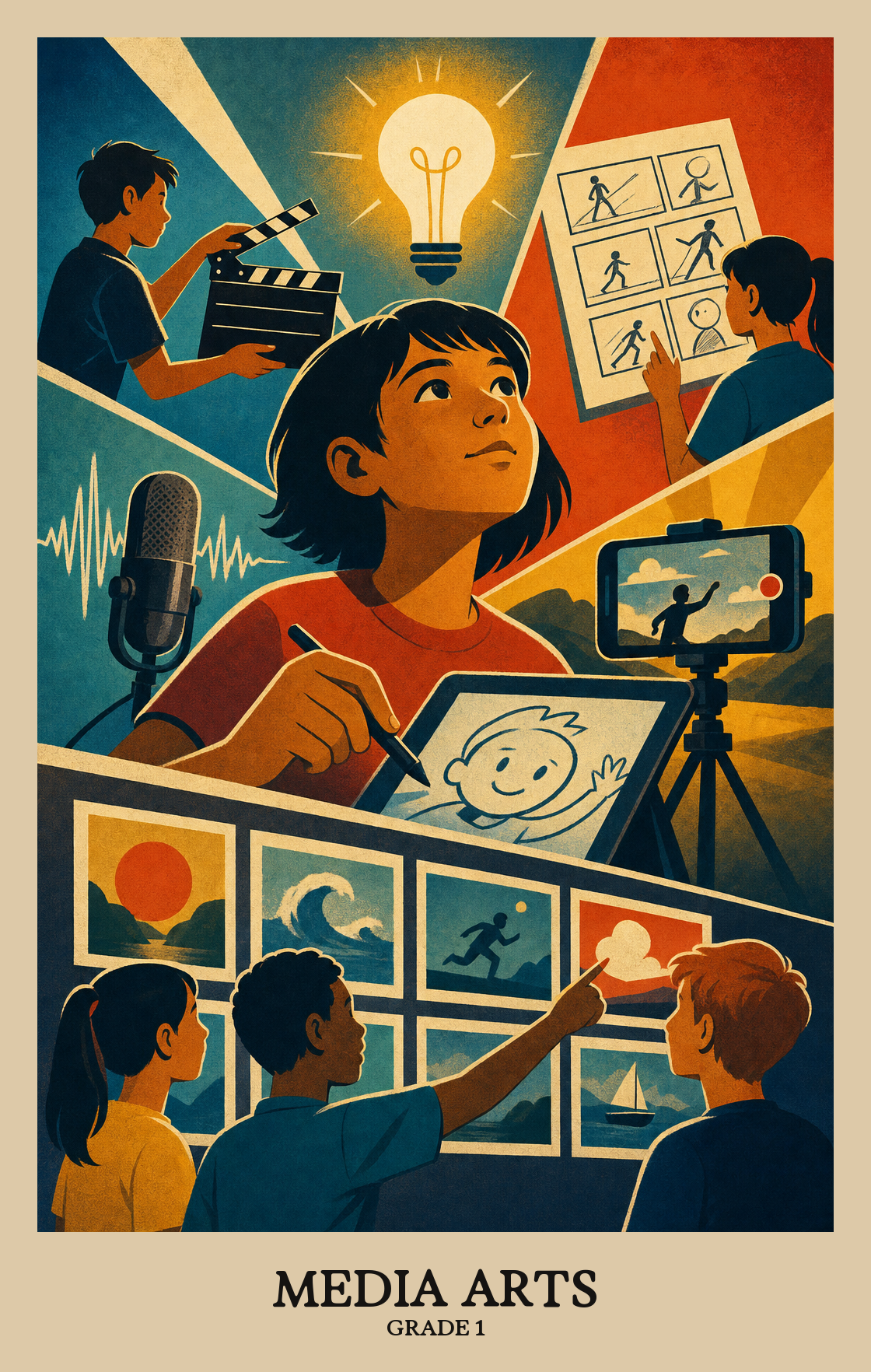
Students start the year sharing what they want to make with pictures, sound, or video. They pull ideas from their own lives, like a pet, a family story, or a favorite place.
Students try simple tools to put their ideas together, like taking photos, recording short clips, or drawing on a screen. They learn that a first try is a starting point, not the finished piece.
Students pick which piece they want to show and add small touches to make it clearer. They practice presenting it to classmates so the audience understands what they meant.
Students slow down to notice what is happening in a picture, song, or short video. They talk about what they see and hear, what the maker might have meant, and what they like about it.
Students connect something from their own life to a media arts project, like turning a memory or feeling into a short video, photo, or digital image.
Students look at photos, drawings, or videos made by people from different places and times, then talk about what those works show about how people lived or what they cared about.
| Standard | Definition | Code |
|---|---|---|
| Synthesize and relate knowledge and personal experiences to make art | Students connect something from their own life to a media arts project, like turning a memory or feeling into a short video, photo, or digital image. | MA:Cn10.1 |
| Relate artistic ideas and works with societal, cultural | Students look at photos, drawings, or videos made by people from different places and times, then talk about what those works show about how people lived or what they cared about. | MA:Cn11.1 |
Students brainstorm ideas for a media project, like a drawing, photo, or short video, before they start making it.
Students arrange images, sounds, or simple digital tools to build a short media project, then make choices about what to keep, cut, or change before calling it done.
Students look back at a media project, make at least one change to improve it, and decide when it is finished.
| Standard | Definition | Code |
|---|---|---|
| Generate and conceptualize artistic ideas and work | Students brainstorm ideas for a media project, like a drawing, photo, or short video, before they start making it. | MA:Cr1.1 |
| Organize and develop artistic ideas and work | Students arrange images, sounds, or simple digital tools to build a short media project, then make choices about what to keep, cut, or change before calling it done. | MA:Cr2.1 |
| Refine and complete artistic work | Students look back at a media project, make at least one change to improve it, and decide when it is finished. | MA:Cr3.1 |
Students pick a piece of their media work to share and explain why they chose it.
Students practice and improve a media project, like a drawing, photo, or short video, before showing it to others. They learn that good work takes more than one try.
Students share their media art projects with an audience and explain what they were trying to say or show. The work itself carries the message.
| Standard | Definition | Code |
|---|---|---|
| Analyze, interpret, and select artistic work for presentation | Students pick a piece of their media work to share and explain why they chose it. | MA:Pr4.1 |
| Develop and refine artistic techniques and work for presentation | Students practice and improve a media project, like a drawing, photo, or short video, before showing it to others. They learn that good work takes more than one try. | MA:Pr5.1 |
| Convey meaning through the presentation of artistic work | Students share their media art projects with an audience and explain what they were trying to say or show. The work itself carries the message. | MA:Pr6.1 |
Students look closely at media art (a photo, a short video, a simple animation) and talk about what they notice. They describe what they see and share what they think the creator wanted them to feel or understand.
Students look at a piece of media art, such as a photo, video, or digital image, and explain what they think the artist was trying to say or show.
Students look at a piece of media art and explain what they like or think could be better, using simple reasons like color, sound, or how the story feels.
| Standard | Definition | Code |
|---|---|---|
| Perceive and analyze artistic work | Students look closely at media art (a photo, a short video, a simple animation) and talk about what they notice. They describe what they see and share what they think the creator wanted them to feel or understand. | MA:Re7.1 |
| Interpret intent and meaning in artistic work | Students look at a piece of media art, such as a photo, video, or digital image, and explain what they think the artist was trying to say or show. | MA:Re8.1 |
| Apply criteria to evaluate artistic work | Students look at a piece of media art and explain what they like or think could be better, using simple reasons like color, sound, or how the story feels. | MA:Re9.1 |
Students make and share work using things like photos, videos, simple animations, drawings on a tablet, and recorded sounds. The focus is on telling small stories and sharing ideas, not on fancy tools. Most projects are short and playful.
Let students take photos or short videos of family pets, toys, or a walk outside, then ask what story they want to tell. Talking about why they chose a picture or sound matters more than the device. Five quiet minutes of listening to their idea goes a long way.
It might be a three-photo story about a snack, a short cartoon with two characters, or a recording of a made-up song with sound effects. Projects are simple and short, often under a minute. The point is that students can explain what they made and why.
Start with looking and listening before making. Spend the first weeks noticing pictures, sounds, and short videos and naming what students see. Then move into small creating projects, and save combined projects like a photo story with sound for later in the year.
Two areas tend to stick: explaining why a choice was made, and revising work instead of calling the first try done. Build in a quick share step on every project where students say one thing they would change. That habit pays off all year.
By spring, students should be able to come up with an idea, make a short piece of media, and tell a classmate what it means. They should also be able to say one thing they like about another student's work and one question they have about it.
No. A phone camera, paper and crayons, or even pots and pans for sound effects are plenty. What helps most is asking students to explain their choices and to try a second version after talking about the first.
Students pull from books they read, family stories, and what they notice in their neighborhood. A short video about a class pet links to writing and science, and a picture story can retell a favorite book. These connections make the work feel real.