Moving safely together
Students learn how to share space in the gym without bumping into classmates. They practice listening for signals, following directions, and treating teammates with respect.
This is the year movement starts to feel like a skill students can practice on purpose. Students work on running, jumping, skipping, hopping, throwing, catching, and kicking, and they learn to follow simple rules in games. They also practice taking turns, listening to a partner, and being a good sport when things do not go their way. By spring, students can move safely around a gym full of classmates and play a basic group game without melting down.
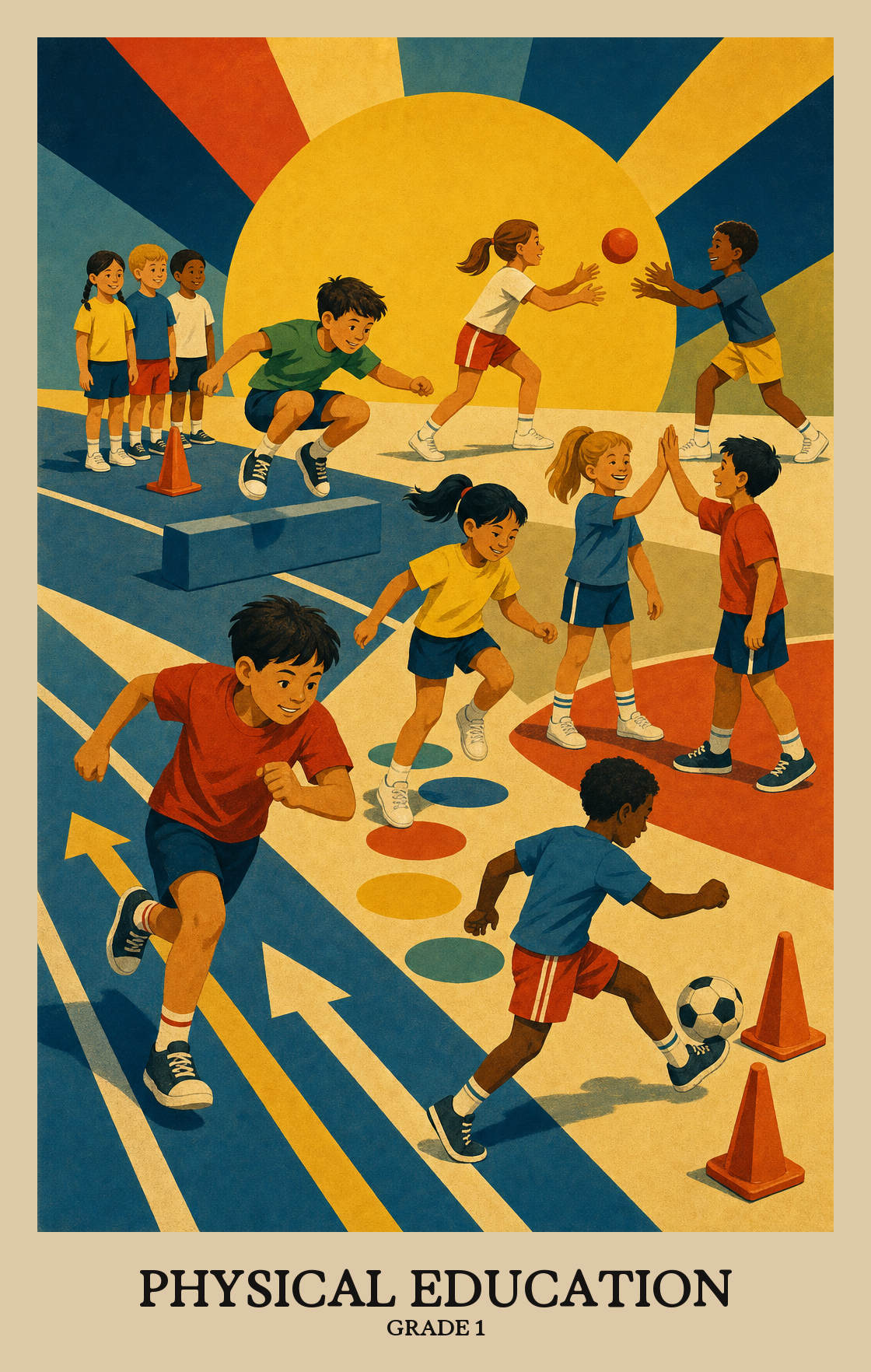
Students learn how to share space in the gym without bumping into classmates. They practice listening for signals, following directions, and treating teammates with respect.
Students work on the basic ways the body moves. They run, hop, skip, gallop, and balance on different body parts, building strength and coordination.
Students start handling balls and other equipment. They practice tossing, catching, kicking, and striking with simple targets and partners.
Students put their skills into simple games and partner activities. They take turns, cheer on classmates, and learn how to play fair when things get competitive.
Students talk about why moving the body feels good and keeps them healthy. They notice their heart beating faster, try new activities, and find ones they enjoy outside of school.
Students practice moving their bodies in different ways: running, jumping, balancing, and throwing or catching. Building these basic skills early helps students stay active as they grow.
Students learn how the body moves and why staying active matters, then use that knowledge during games and activities. Knowing the basics, like how to run, jump, or pace yourself, helps students move better and feel better.
Students practice working with classmates during movement activities, taking turns, listening, and treating others fairly. These habits build the self-control and cooperation students use on the playground and beyond.
Students practice basic movement skills and start to notice how active play makes them feel. They begin making choices to move their bodies regularly, building habits that can last a lifetime.
| Standard | Definition | Code |
|---|---|---|
| Develop a variety of motor skills, including locomotor, non-locomotor | Students practice moving their bodies in different ways: running, jumping, balancing, and throwing or catching. Building these basic skills early helps students stay active as they grow. | CT-PE.1.1 |
| Apply knowledge related to movement, performance | Students learn how the body moves and why staying active matters, then use that knowledge during games and activities. Knowing the basics, like how to run, jump, or pace yourself, helps students move better and feel better. | CT-PE.2.1 |
| Develop social skills through movement, including respect for self and others… | Students practice working with classmates during movement activities, taking turns, listening, and treating others fairly. These habits build the self-control and cooperation students use on the playground and beyond. | CT-PE.3.1 |
| Develop personal skills, identify personal benefits of movement | Students practice basic movement skills and start to notice how active play makes them feel. They begin making choices to move their bodies regularly, building habits that can last a lifetime. | CT-PE.4.1 |
Students should be able to run, skip, hop, and gallop without falling over, and toss, catch, kick, and bounce a ball with some control. They should also know how to take turns, follow simple game rules, and name a few reasons moving their body feels good.
Short bursts of active play go a long way. Try ten minutes of catch with a soft ball, hopping on one foot down the hallway, or kicking a ball back and forth in the yard. The goal is comfort with movement, not perfect form.
At this age, skills look very different from one student to the next, and that is normal. Focus on practice, not winning. Roll a ball back and forth, count successful catches, and celebrate small wins like catching three in a row.
Start the fall with locomotor skills like walking, running, jumping, and hopping in open space. Move to non-locomotor work like balancing, bending, and twisting by winter. Save bouncing, throwing, catching, and kicking for later in the year, once body control is steadier.
It looks like sharing equipment without grabbing, waiting for a turn, and using kind words when a partner misses a catch. Pair work and small group games of three or four work better than full class games at this age.
Aim for about an hour of active play most days, broken into smaller chunks. Walking to the park, riding a bike, playing tag, or dancing in the living room all count. Screen breaks that get students up and moving help too.
Skipping, catching with two hands, and kicking a moving ball tend to take the longest. Many students also need extra practice stopping safely and keeping a safe distance from classmates. Build short skill stations into warm-ups all year, not just during the unit.
They should move through space without bumping into others, change direction on a signal, and combine two skills like running and then jumping. They should also follow two-step directions and play a simple partner game without an adult stepping in.