Getting ideas onto the page
Students start the year by turning their own experiences and interests into art. They try out sketches, brainstorm with classmates, and learn that a first idea is just a starting point.
This is the year art making becomes intentional. Students plan a piece before they start, then revise it as they work instead of stopping at the first try. They also begin talking about art with real reasons, explaining what a piece means and why one choice works better than another. By spring, students can finish a project they planned themselves and explain the ideas behind it.
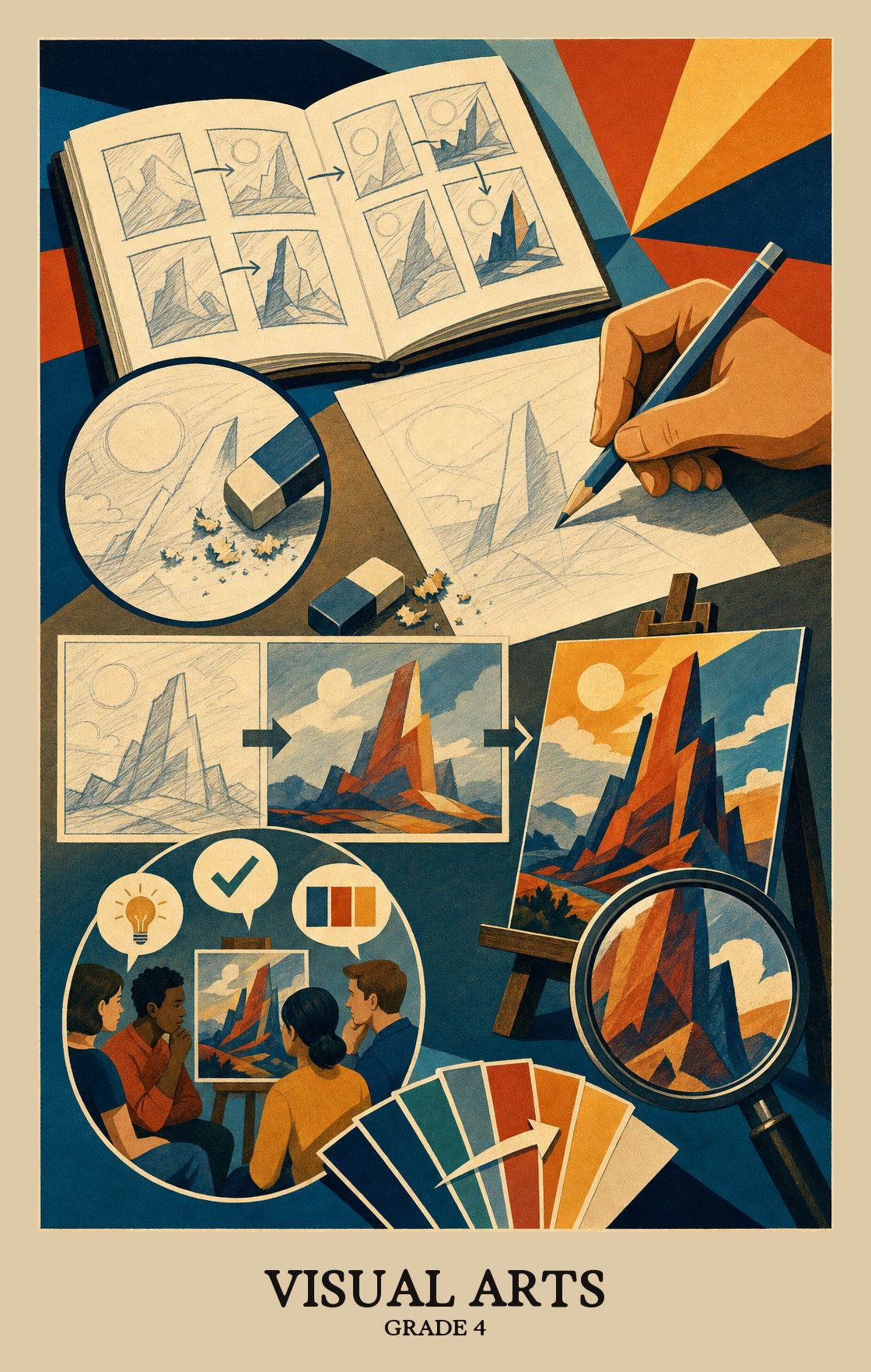
Students start the year by turning their own experiences and interests into art. They try out sketches, brainstorm with classmates, and learn that a first idea is just a starting point.
Students practice with different tools and materials, from pencils and paint to clay and collage. They learn how to plan a piece, fix mistakes, and keep working on something until it feels finished.
Students slow down to study artwork by others and by themselves. They notice color, shape, and mood, and they explain what they think the artist was trying to say.
Students look at how art connects to history, communities, and daily life around the world. They compare older work with newer work and think about why people make art in the first place.
Students choose pieces they are proud of and prepare them for display. They talk about why they picked each piece, what it means, and use simple criteria to give honest feedback on their own and others' work.
Students draw on something they already know or have lived through to make choices in their artwork. Personal experience becomes part of the creative process.
Students look at a painting or sculpture and connect it to the time, place, and culture it came from. Understanding that context helps explain why the artist made the choices they did.
| Standard | Definition | Code |
|---|---|---|
| Synthesize and relate knowledge and personal experiences to make art | Students draw on something they already know or have lived through to make choices in their artwork. Personal experience becomes part of the creative process. | VA:Cn10.4 |
| Relate artistic ideas and works with societal, cultural | Students look at a painting or sculpture and connect it to the time, place, and culture it came from. Understanding that context helps explain why the artist made the choices they did. | VA:Cn11.4 |
Students brainstorm ideas for original artwork, then choose one worth making. The focus is on how an idea starts and takes shape before any drawing or building begins.
Students take a rough sketch or idea and refine it into a finished piece, making deliberate choices about color, shape, and composition along the way.
Students revisit a piece of artwork, make deliberate changes to improve it, and decide when it is finished. The focus is on looking critically at their own work and acting on what they notice.
| Standard | Definition | Code |
|---|---|---|
| Generate and conceptualize artistic ideas and work | Students brainstorm ideas for original artwork, then choose one worth making. The focus is on how an idea starts and takes shape before any drawing or building begins. | VA:Cr1.4 |
| Organize and develop artistic ideas and work | Students take a rough sketch or idea and refine it into a finished piece, making deliberate choices about color, shape, and composition along the way. | VA:Cr2.4 |
| Refine and complete artistic work | Students revisit a piece of artwork, make deliberate changes to improve it, and decide when it is finished. The focus is on looking critically at their own work and acting on what they notice. | VA:Cr3.4 |
Students look at several pieces of their own artwork and choose one to display or share, explaining why that piece is ready to be seen by others.
Students practice and improve their artwork before it goes on display, adjusting details like color, line, or composition until the piece is ready to share with an audience.
Students choose how to display or share a finished artwork so the idea or feeling behind it comes through to the viewer.
| Standard | Definition | Code |
|---|---|---|
| Analyze, interpret, and select artistic work for presentation | Students look at several pieces of their own artwork and choose one to display or share, explaining why that piece is ready to be seen by others. | VA:Pr4.4 |
| Develop and refine artistic techniques and work for presentation | Students practice and improve their artwork before it goes on display, adjusting details like color, line, or composition until the piece is ready to share with an audience. | VA:Pr5.4 |
| Convey meaning through the presentation of artistic work | Students choose how to display or share a finished artwork so the idea or feeling behind it comes through to the viewer. | VA:Pr6.4 |
Students look closely at a piece of artwork and explain what they notice, describing how the artist used color, shape, or line to create a mood or tell a story.
Students look at a piece of art and explain what they think the artist meant to say or show. They back up their thinking with details they can actually see in the work.
Students look at a piece of art and judge it using a set of agreed-on questions or standards, such as whether the artist's choices fit the message or mood. They explain their thinking with reasons, not just personal preference.
| Standard | Definition | Code |
|---|---|---|
| Perceive and analyze artistic work | Students look closely at a piece of artwork and explain what they notice, describing how the artist used color, shape, or line to create a mood or tell a story. | VA:Re7.4 |
| Interpret intent and meaning in artistic work | Students look at a piece of art and explain what they think the artist meant to say or show. They back up their thinking with details they can actually see in the work. | VA:Re8.4 |
| Apply criteria to evaluate artistic work | Students look at a piece of art and judge it using a set of agreed-on questions or standards, such as whether the artist's choices fit the message or mood. They explain their thinking with reasons, not just personal preference. | VA:Re9.4 |
Students come up with their own ideas, plan a piece, make it, and then talk about what works and what to fix. They also look at art from different times and places and connect it to their own lives. The work moves from quick sketches to finished pieces students can explain.
Keep paper, pencils, scissors, and tape in one easy spot. Ask students to tell the story behind a drawing instead of judging how it looks. Visiting a local museum, library art display, or even looking at art online for ten minutes counts.
Skip the talent talk and treat drawing like a skill that grows with practice. Suggest copying something real, like a shoe or a leaf, and looking carefully before each line. Praise specific choices, such as how they showed light or texture, instead of saying it looks good.
Start with idea generation and sketchbook habits, then move into one medium at a time so techniques accumulate. Mid-year, layer in projects that ask for revision and personal meaning. End the year with a portfolio or exhibit where students select, present, and explain their work.
Refining a piece instead of declaring it done in five minutes is the big one. Students also need repeated practice using art vocabulary to describe what they see, rather than saying a piece is good or bad. Planning before making tends to need steady reinforcement too.
Memorizing names is not the goal. Students should be able to look at a piece of art and say something about when or where it came from and how that connects to the people who made it. Talking about art at a museum or in a book counts as practice.
By spring, students should plan a piece, stick with it through revision, and explain the choices they made. They should also be able to look at someone else's work and offer specific feedback using basic art vocabulary. Comfort with sketchbooks and multiple media is a good sign.
Most meaningful projects run across three to six class periods so students can plan, make, step back, and revise. Quick one-day activities are useful for warmups and skill drills. Save longer timelines for pieces tied to personal meaning or a class exhibit.