Exploring tools and ideas
Students try out cameras, tablets, microphones, and drawing apps for the first time. They learn that pictures, sounds, and videos are things people make, and they start sharing their own ideas for what to create.
This is the year students start playing with cameras, tablets, and recorded sounds as tools for telling their own little stories. They come up with an idea, try it out, and tinker with it until it feels right. Students also look at videos, photos, and animations and start saying what they notice and what they like. By spring, they can make a short piece of media, share it with the class, and explain what it is about.
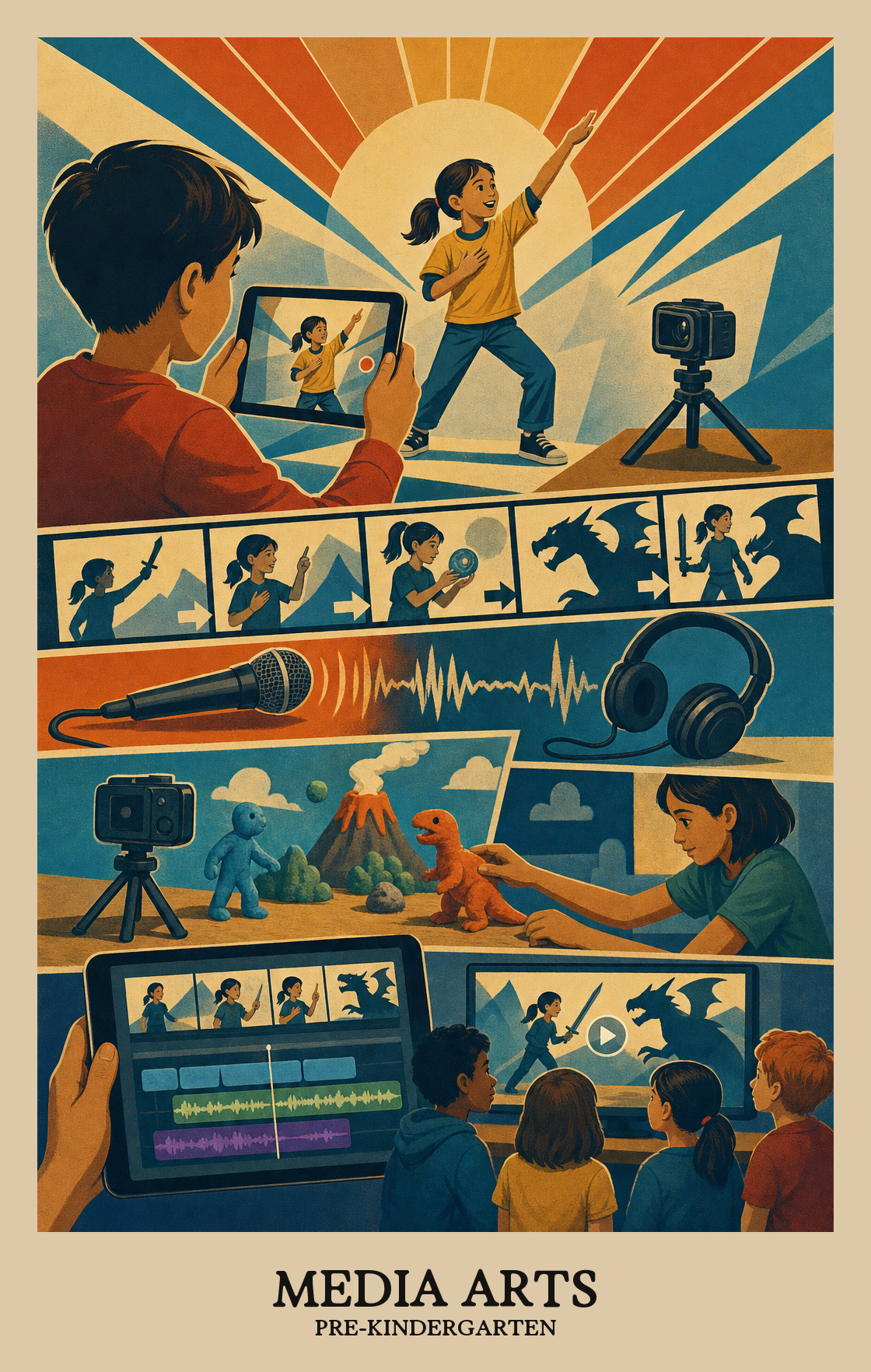
Students try out cameras, tablets, microphones, and drawing apps for the first time. They learn that pictures, sounds, and videos are things people make, and they start sharing their own ideas for what to create.
Students start small projects like snapping photos, recording their voice telling a story, or making short videos. They learn that a project takes a few steps from start to finish.
Students look at what they made and pick a favorite to show others. They practice fixing small things, like trying a clearer photo or a louder voice, before sharing.
Students watch short videos, listen to recordings, and look at pictures together. They talk about what they notice, what the maker might have meant, and what they like or would change.
Students make projects about their families, pets, holidays, and favorite places. They start to see that the videos, photos, and songs around them come from real people with real stories.
Students connect something they know or have done in real life to a media arts project. A memory, a feeling, or a favorite thing becomes the starting point for making something new.
Students look at pictures, songs, or artwork and talk about where they come from and what they mean to different people.
| Standard | Definition | Code |
|---|---|---|
| Synthesize and relate knowledge and personal experiences to make art | Students connect something they know or have done in real life to a media arts project. A memory, a feeling, or a favorite thing becomes the starting point for making something new. | MA:Cn10.pk |
| Relate artistic ideas and works with societal, cultural | Students look at pictures, songs, or artwork and talk about where they come from and what they mean to different people. | MA:Cn11.pk |
Students come up with their own ideas for media projects, like choosing what to draw, photograph, or make on a screen.
Students pick an idea and decide how to show it, choosing what to make, what materials to use, and how to put it together.
Students finish a media art project by looking it over and making small fixes before calling it done.
| Standard | Definition | Code |
|---|---|---|
| Generate and conceptualize artistic ideas and work | Students come up with their own ideas for media projects, like choosing what to draw, photograph, or make on a screen. | MA:Cr1.pk |
| Organize and develop artistic ideas and work | Students pick an idea and decide how to show it, choosing what to make, what materials to use, and how to put it together. | MA:Cr2.pk |
| Refine and complete artistic work | Students finish a media art project by looking it over and making small fixes before calling it done. | MA:Cr3.pk |
Students pick which of their media art projects to share with others, starting to think about what makes one piece worth showing.
Students practice a media art project (a drawing, a short video, or a simple photo) more than once to make it ready to show others.
Students share a drawing, song, or story with the class and show what they made and why it matters to them.
| Standard | Definition | Code |
|---|---|---|
| Analyze, interpret, and select artistic work for presentation | Students pick which of their media art projects to share with others, starting to think about what makes one piece worth showing. | MA:Pr4.pk |
| Develop and refine artistic techniques and work for presentation | Students practice a media art project (a drawing, a short video, or a simple photo) more than once to make it ready to show others. | MA:Pr5.pk |
| Convey meaning through the presentation of artistic work | Students share a drawing, song, or story with the class and show what they made and why it matters to them. | MA:Pr6.pk |
Students look closely at pictures, videos, or sounds made with technology and talk about what they notice.
Students look at a piece of art, a photo, or a short video and say what they think it means or how it makes them feel. There is no single right answer.
Students look at a drawing or hear a song and say what they like about it and why. They start learning that opinions about art can be explained, not just felt.
| Standard | Definition | Code |
|---|---|---|
| Perceive and analyze artistic work | Students look closely at pictures, videos, or sounds made with technology and talk about what they notice. | MA:Re7.pk |
| Interpret intent and meaning in artistic work | Students look at a piece of art, a photo, or a short video and say what they think it means or how it makes them feel. There is no single right answer. | MA:Re8.pk |
| Apply criteria to evaluate artistic work | Students look at a drawing or hear a song and say what they like about it and why. They start learning that opinions about art can be explained, not just felt. | MA:Re9.pk |
Media arts means making and sharing things with simple tools like a camera, a tablet, a microphone, or a photo. Students take pictures, record sounds, make short videos, and add drawings to pictures. The focus is play and curiosity, not polished projects.
Hand a phone or tablet to a child and let them take pictures of things they like, then look at the photos together and ask what they were thinking. Recording silly voices, making a short pretend movie, or drawing on a photo all count. Five minutes is plenty.
A little bit of making, with an adult nearby, is different from watching videos alone. Short bursts of taking photos, recording sounds, or snapping pictures of a drawing are active and creative. Keep sessions short and talk about what was made afterward.
By spring, students can take a picture or record a sound on purpose, say what it is about, and share it with someone. They can also look at a classmate's photo or video and say one thing they notice. Confidence and curiosity matter more than the finished piece.
Start with exploring tools through play: pressing the camera button, listening to a recording, looking at pictures together. Move into making on purpose, such as photographing a favorite toy or recording a story. End the year with simple sharing routines where students show their work and say one thing about it.
Holding a device steady, pressing the right button at the right time, and waiting for a sound or picture to finish recording all take practice. Talking about a finished piece, beyond saying that it is good, also needs modeling. Short demonstrations work better than long instructions.
Ask students to photograph or record something from home, family, or a favorite story. Looking at pictures of their pets, kitchens, or grandparents gives them something real to talk about. Personal pictures and sounds make the work feel like theirs.
A ready student can pick up a simple tool, make something on purpose, and talk about it in a sentence or two. They can also look at someone else's work and notice a detail. Comfort with the tools and willingness to share are the strongest signals.