Exploring sound and voice
Students get comfortable making music together. They sing simple songs, copy rhythms by clapping, and try out instruments like shakers and drums to hear how each one sounds different.
This is the year music starts to feel like something students make, not just something they hear. Students sing simple songs, tap along to a steady beat, and try out instruments to see what sounds they can create. They also start to notice how music makes them feel and talk about what they hear. By spring, they can sing a short song from memory and clap a steady beat along with it.
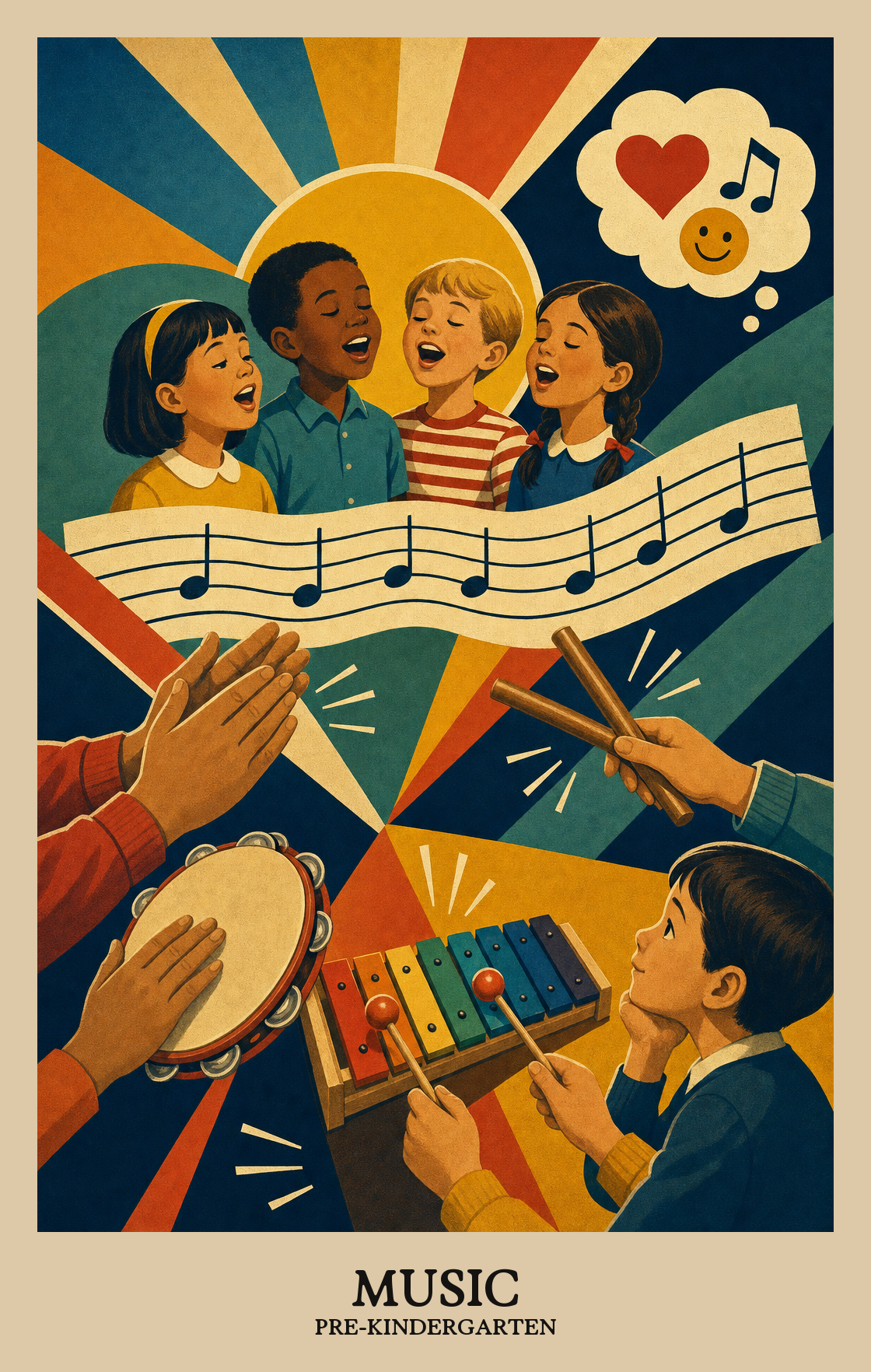
Students get comfortable making music together. They sing simple songs, copy rhythms by clapping, and try out instruments like shakers and drums to hear how each one sounds different.
Students start inventing. They make up little tunes, add sound effects to stories, and decide which instrument fits a feeling like happy, sleepy, or stormy.
Students pick a song or sound piece and work on it until it feels ready to share. They practice singing or playing along with the group and perform for classmates or family.
Students listen to different kinds of music and share what they notice. They describe whether music is fast or slow, loud or quiet, and talk about songs from home and other cultures.
Students connect what they already know and feel to the music they make or respond to. A song about rain means more when students share what rain sounds like to them.
Songs and music come from real places, people, and times. Students listen to music from different cultures and talk about where it comes from and what it means to the people who made it.
| Standard | Definition | Code |
|---|---|---|
| Synthesize and relate knowledge and personal experiences to make art | Students connect what they already know and feel to the music they make or respond to. A song about rain means more when students share what rain sounds like to them. | MU:Cn10.pk |
| Relate artistic ideas and works with societal, cultural | Songs and music come from real places, people, and times. Students listen to music from different cultures and talk about where it comes from and what it means to the people who made it. | MU:Cn11.pk |
Students hum, clap, or make up short songs on their own. This is the start of learning to create music.
Students pick a song, sound, or rhythm they like and try it out, changing small things until it feels right.
Students pick a song or rhythm they made and practice it until it sounds the way they want. They finish the work instead of just starting it.
| Standard | Definition | Code |
|---|---|---|
| Generate and conceptualize artistic ideas and work | Students hum, clap, or make up short songs on their own. This is the start of learning to create music. | MU:Cr1.pk |
| Organize and develop artistic ideas and work | Students pick a song, sound, or rhythm they like and try it out, changing small things until it feels right. | MU:Cr2.pk |
| Refine and complete artistic work | Students pick a song or rhythm they made and practice it until it sounds the way they want. They finish the work instead of just starting it. | MU:Cr3.pk |
Students choose a song or musical piece they want to perform and start learning how to play or sing it. This is the first step in getting ready to share music with others.
Students practice a song or rhythm until they can perform it with confidence. The focus is on getting better through repetition, not just doing it once.
Students perform a song or rhythm for others and put real feeling into it, not just the right notes.
| Standard | Definition | Code |
|---|---|---|
| Analyze, interpret, and select artistic work for presentation | Students choose a song or musical piece they want to perform and start learning how to play or sing it. This is the first step in getting ready to share music with others. | MU:Pr4.pk |
| Develop and refine artistic techniques and work for presentation | Students practice a song or rhythm until they can perform it with confidence. The focus is on getting better through repetition, not just doing it once. | MU:Pr5.pk |
| Convey meaning through the presentation of artistic work | Students perform a song or rhythm for others and put real feeling into it, not just the right notes. | MU:Pr6.pk |
Students listen to a short song or sound and share what they notice, like whether it feels fast or slow, loud or quiet.
Students listen to a song or watch a performance and say what it makes them think or feel. They explain why the music sounds happy, sad, scary, or silly.
Students listen to a short song or performance and say what they liked about it and why. They start learning that opinions about music can be explained with a reason.
| Standard | Definition | Code |
|---|---|---|
| Perceive and analyze artistic work | Students listen to a short song or sound and share what they notice, like whether it feels fast or slow, loud or quiet. | MU:Re7.pk |
| Interpret intent and meaning in artistic work | Students listen to a song or watch a performance and say what it makes them think or feel. They explain why the music sounds happy, sad, scary, or silly. | MU:Re8.pk |
| Apply criteria to evaluate artistic work | Students listen to a short song or performance and say what they liked about it and why. They start learning that opinions about music can be explained with a reason. | MU:Re9.pk |
Music for four-year-olds is mostly singing, moving, clapping, and playing simple instruments like shakers and drums. Students learn to keep a steady beat, match a pitch, and listen for loud, soft, fast, and slow. The point is play and exploration, not performance.
Sing together in the car, clap along to songs, and dance in the living room. Five minutes a day matters more than a long lesson. Let students pick the songs sometimes so they hear that their taste counts.
No. Reading notes comes much later. Right now the goal is hearing the difference between high and low sounds, fast and slow beats, and joining in with a song or clapping pattern.
Pots and pans, wooden spoons, and shoeboxes work as instruments. Try a song where students copy a clapping pattern back, or pause the music and freeze. Short, silly, and repeated often is better than fancy.
Start with steady beat, call-and-response singing, and basic loud and soft. Add high and low pitches, simple rhythm patterns, and movement that matches the music as the year goes on. Revisit favorite songs often so students can layer new skills onto familiar tunes.
Keeping a steady beat while singing is the hardest combination. Many students can do one or the other at first. Short daily practice with a drum or patting knees, separated from singing at first, helps before putting the two back together.
Pick a small set of songs from different traditions and return to them across the year. Talk briefly about where a song comes from and when people sing it. Repetition lets students hear new sound patterns without it feeling like a one-time lesson.
By spring, students should join in on familiar songs, keep a steady beat for short stretches, and use words like loud, soft, fast, and slow to describe what they hear. They should also be willing to share a song or movement they made up.