Getting ideas for media projects
Students start the year coming up with ideas for things like short videos, photos, drawings on a tablet, or simple animations. They learn to pull from their own lives and what they notice around them.
This is the year students start treating photos, videos, and sounds as tools for telling their own stories. They come up with ideas, gather pictures or short clips, and put them together so a viewer understands the message. Students also look at media made by others and talk about what it means and what works. By spring, they can plan a small media project, share it with the class, and explain the choices they made.
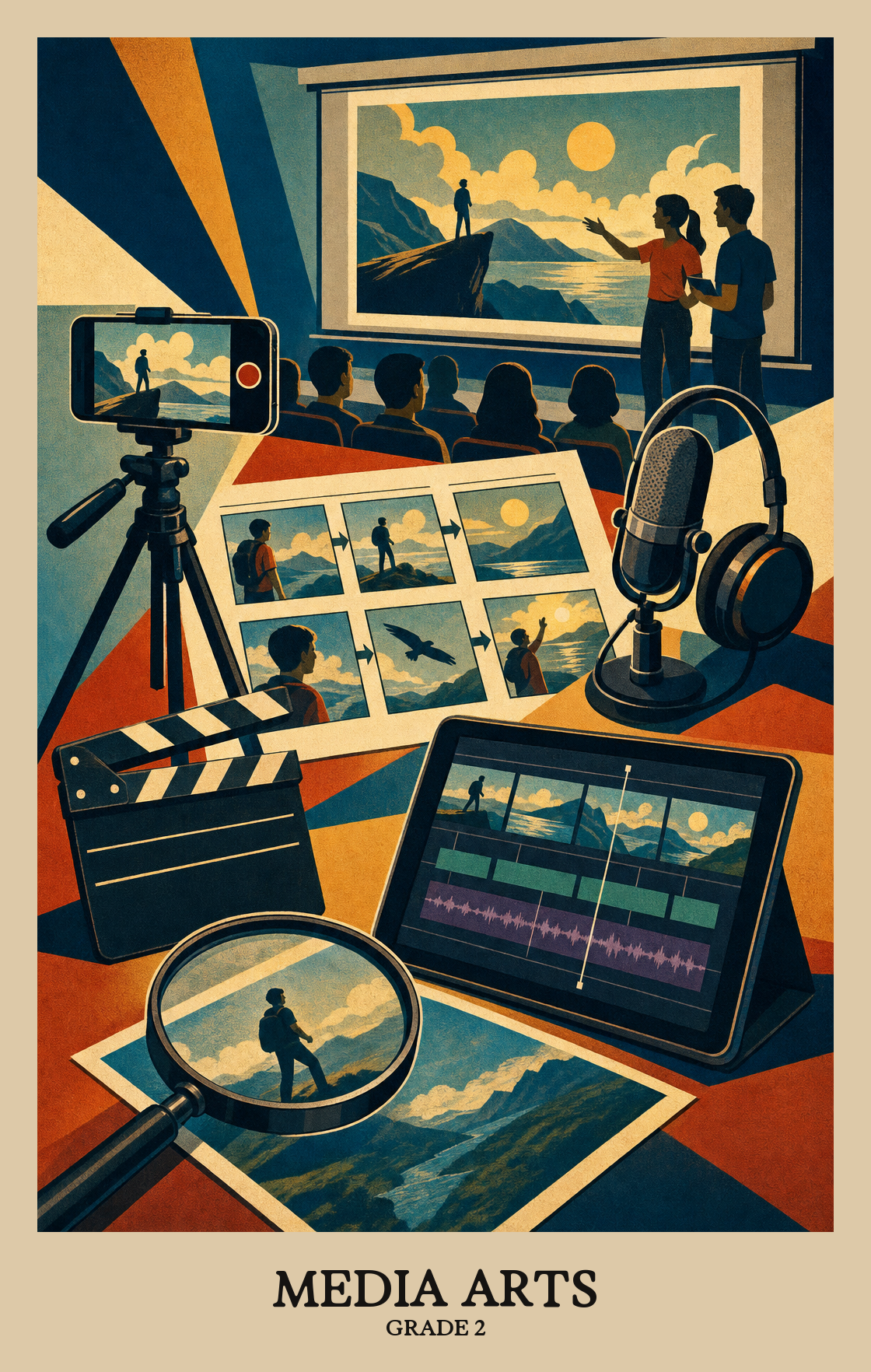
Students start the year coming up with ideas for things like short videos, photos, drawings on a tablet, or simple animations. They learn to pull from their own lives and what they notice around them.
Students plan out their projects and put the pieces together in an order that makes sense. They practice using tools like cameras, drawing apps, or recording devices to shape what they want to make.
Students go back into their work to fix what is not working and make it clearer for an audience. They pick which pieces to share and think about how to show them so the message comes through.
Students watch and study videos, images, and other media made by themselves and others. They talk about what the work means, what choices the maker made, and what makes a piece work well.
Students connect something from their own life to a media arts project, using a memory, feeling, or everyday experience as the starting point for what they make.
Students look at media art, like photos, videos, or digital images, and talk about what the world around the artist was like when it was made. That context helps explain why the art looks the way it does.
| Standard | Definition | Code |
|---|---|---|
| Synthesize and relate knowledge and personal experiences to make art | Students connect something from their own life to a media arts project, using a memory, feeling, or everyday experience as the starting point for what they make. | MA:Cn10.2 |
| Relate artistic ideas and works with societal, cultural | Students look at media art, like photos, videos, or digital images, and talk about what the world around the artist was like when it was made. That context helps explain why the art looks the way it does. | MA:Cn11.2 |
Students brainstorm and sketch out ideas for a media project, like a short animation, a photo, or a simple digital image, before they start making it.
Students pick a media tool (a camera, drawing app, or simple animation) and plan how to arrange their images or sounds to share an idea. The choices they make shape what the final piece looks, sounds, or feels like.
Students look at a media project they made, decide what could be clearer or more interesting, and make changes before calling it done.
| Standard | Definition | Code |
|---|---|---|
| Generate and conceptualize artistic ideas and work | Students brainstorm and sketch out ideas for a media project, like a short animation, a photo, or a simple digital image, before they start making it. | MA:Cr1.2 |
| Organize and develop artistic ideas and work | Students pick a media tool (a camera, drawing app, or simple animation) and plan how to arrange their images or sounds to share an idea. The choices they make shape what the final piece looks, sounds, or feels like. | MA:Cr2.2 |
| Refine and complete artistic work | Students look at a media project they made, decide what could be clearer or more interesting, and make changes before calling it done. | MA:Cr3.2 |
Students choose a piece of media work they've made, explain why they picked it, and describe what it shows about their ideas.
Students practice and improve a media arts project (like a short video or digital image) until it's ready to share with an audience. The focus is on making intentional choices about how the final piece looks or sounds.
Students share a finished media project, like a photo, animation, or short video, with an audience. The choices they made, colors, sounds, images, tell the story they wanted to tell.
| Standard | Definition | Code |
|---|---|---|
| Analyze, interpret, and select artistic work for presentation | Students choose a piece of media work they've made, explain why they picked it, and describe what it shows about their ideas. | MA:Pr4.2 |
| Develop and refine artistic techniques and work for presentation | Students practice and improve a media arts project (like a short video or digital image) until it's ready to share with an audience. The focus is on making intentional choices about how the final piece looks or sounds. | MA:Pr5.2 |
| Convey meaning through the presentation of artistic work | Students share a finished media project, like a photo, animation, or short video, with an audience. The choices they made, colors, sounds, images, tell the story they wanted to tell. | MA:Pr6.2 |
Students look closely at a short video, photo, or digital image and describe what they notice, such as color, sound, movement, or mood.
Students look at a photo, video, or digital artwork and explain what the creator was trying to say or show. They back up their thinking with details they can actually see or hear in the work.
Students look at a piece of media art and decide what makes it good or not so good. They use a short list of criteria, like whether the colors are clear or the message is easy to understand, to explain their thinking.
| Standard | Definition | Code |
|---|---|---|
| Perceive and analyze artistic work | Students look closely at a short video, photo, or digital image and describe what they notice, such as color, sound, movement, or mood. | MA:Re7.2 |
| Interpret intent and meaning in artistic work | Students look at a photo, video, or digital artwork and explain what the creator was trying to say or show. They back up their thinking with details they can actually see or hear in the work. | MA:Re8.2 |
| Apply criteria to evaluate artistic work | Students look at a piece of media art and decide what makes it good or not so good. They use a short list of criteria, like whether the colors are clear or the message is easy to understand, to explain their thinking. | MA:Re9.2 |
Media arts means making things with cameras, microphones, drawing apps, and simple video or sound tools. Students make short videos, slide shows, animations, podcasts, or digital drawings. The focus is on telling a small story or sharing an idea using a screen or a recording.
Let students use a phone or tablet to take photos, record a short video, or draw a picture in a kid-friendly app. Ask what story they want to tell before they start. Five minutes of planning makes the finished piece much stronger.
No. A basic phone, tablet, or even paper and a voice recorder is enough. Built-in camera apps, free drawing apps, and the voice memo app cover almost everything students need this year.
Think short and simple. A 30-second video about a pet, a three-slide story about a field trip, a drawing of a dream playground, or a recorded retelling of a favorite book. The piece should have a clear beginning, middle, and a point.
Start with idea-building and simple tools like photos and drawings, then move to sequencing images into a short story, then add sound or voice. Save group projects and editing tasks for the second half of the year, once students can plan a piece on their own.
Planning before recording is the hardest habit to build. Students also struggle with finishing a piece instead of restarting, and with giving useful feedback to a classmate. Short checklists and a fixed revision step in every project help a lot.
By spring, students should be able to come up with an idea, make a short media piece with a clear message, and explain a change they made to improve it. They should also be able to say one thing they like about a classmate's work and one question it raises.
Ask what they wanted the viewer to feel or learn, and what part they are most proud of. Then ask what they would change if they made it again. These three questions cover most of what students are expected to think about this year.
Students pull ideas from books, family stories, and lessons about their community to make their pieces. A short video about a holiday, a slideshow about a science topic, or a podcast retelling a story all count. Connecting media work to other subjects is a core part of the year.