Knowing yourself
Students start the year looking inward. They name what they feel, notice what sets them off, and start to see what they are good at and where they want to grow.
This is the stretch when students start managing themselves the way adults do. They learn to notice their own moods, slow down before reacting, and stay organized when school gets harder. Friendships get more complicated, so students practice listening to people who see things differently and working through disagreements without blowing up. By spring, students can name a goal, name what's getting in the way, and ask for help when they need it.
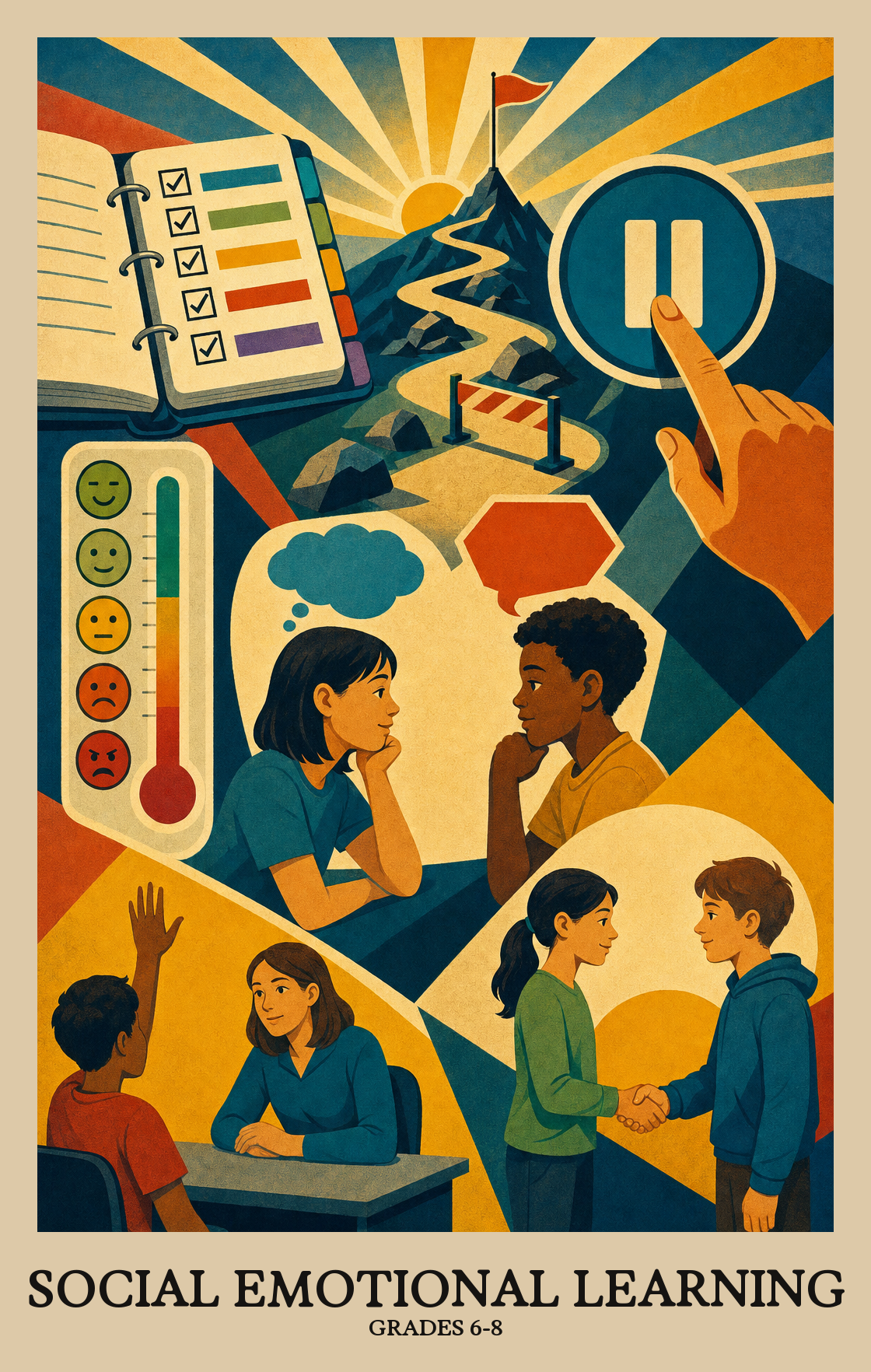
Students start the year looking inward. They name what they feel, notice what sets them off, and start to see what they are good at and where they want to grow.
Students work on handling big feelings and getting things done. They practice calming down before reacting, setting small goals, and keeping track of homework and deadlines.
Students step outside their own heads. They listen to classmates with different backgrounds, try to understand how others feel, and learn who to turn to at school, at home, and around town.
Students focus on how they treat the people around them. They practice clear communication, working on group projects, working through arguments, and asking for help when something is too much.
Students pull it all together as the year ends. Before acting, they think through what could happen, who it affects, and whether the choice fits the kind of person they want to be.
Students learn to notice their own emotions and understand why they act the way they do. They also identify what they are good at and where they need to grow, so they can make better decisions in and out of school.
Students practice staying calm under pressure, pausing before reacting, and keeping their work and goals organized. These skills help them handle tough moments in school and everyday life without falling apart.
Students practice seeing situations from someone else's point of view, including people from different backgrounds. They also learn to identify who and what can help them at school, at home, and in their community.
Students practice the relationship skills that hold friendships and group work together: listening well, working through disagreements, and asking for help when they need it.
Students practice thinking through a choice before making it, weighing what could go wrong and how it affects other people. The goal is decisions that are honest, fair, and considerate of everyone involved.
| Standard | Definition | Code |
|---|---|---|
| The abilities to understand one's own emotions, thoughts Grades 6-8 | Students learn to notice their own emotions and understand why they act the way they do. They also identify what they are good at and where they need to grow, so they can make better decisions in and out of school. | FL-SEL.1.6-8 |
| The abilities to manage emotions, thoughts Grades 6-8 | Students practice staying calm under pressure, pausing before reacting, and keeping their work and goals organized. These skills help them handle tough moments in school and everyday life without falling apart. | FL-SEL.2.6-8 |
| The abilities to understand the perspectives of and empathise with others… Grades 6-8 | Students practice seeing situations from someone else's point of view, including people from different backgrounds. They also learn to identify who and what can help them at school, at home, and in their community. | FL-SEL.3.6-8 |
| The abilities to establish and maintain healthy and supportive relationships… Grades 6-8 | Students practice the relationship skills that hold friendships and group work together: listening well, working through disagreements, and asking for help when they need it. | FL-SEL.4.6-8 |
| The abilities to make caring and constructive choices about personal behavior… Grades 6-8 | Students practice thinking through a choice before making it, weighing what could go wrong and how it affects other people. The goal is decisions that are honest, fair, and considerate of everyone involved. | FL-SEL.5.6-8 |
Students learn to notice what they are feeling, manage stress, get along with people who are different from them, and think before they act. The middle school years are when friendships, identity, and pressure all get more complicated, so these skills get a lot of practice.
Talk about real situations from the day. Ask what felt hard, how it was handled, and what could go differently next time. Five minutes in the car or at dinner is enough. Naming a feeling out loud is often the first step to managing it.
Students should be able to name their emotions, calm themselves down when upset, see a situation from another person's point of view, work through a disagreement without blowing up, and think about consequences before making a choice.
Start with self-awareness and naming emotions, since the rest builds on that. Move into self-management strategies like handling stress and staying organised. Then shift outward to empathy, healthy relationships, and decision-making. Loop back to earlier skills when conflicts or transitions come up.
Impulse control and conflict resolution. Students often know what they should do in a calm moment but lose access to those skills when they are angry or embarrassed. Short, repeated practice with realistic scenarios works better than one long lesson.
Drop the questions for a bit and stay nearby. A walk, a snack, or a shared task often opens the door faster than a face-to-face conversation. Let students know the conversation can wait until later, but it will happen.
Talk about people in books, shows, or the news whose lives look different from the family's. Ask what that person might be feeling and why. Treat disagreements at home as practice, not problems to shut down.
Watch for changes in how students handle small frustrations, ask for help, and talk about other people. Brief check-ins, exit tickets about feelings, and notes from other adults in the building give a clearer picture than any single rubric.