Sketching ideas from life
Students start the year by collecting ideas in a sketchbook. They pull from their own lives, memories, and things they notice to plan original artwork.
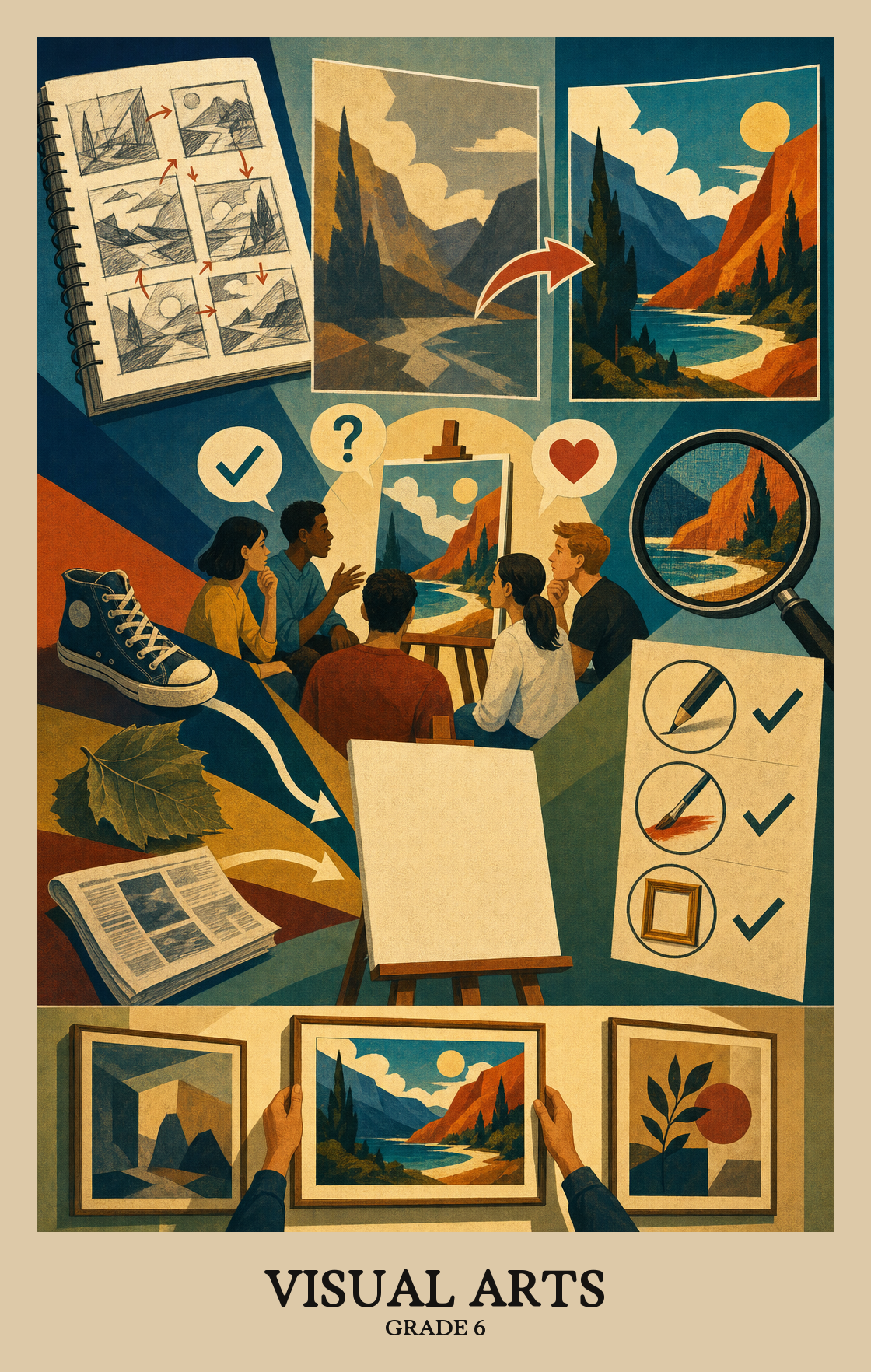
This is the year art shifts from making what looks good to making work that means something. Students pull from their own lives and from what they see in the world to plan a piece on purpose, then revise it instead of stopping at the first try. They also learn to talk about art, their own and others', using real reasons for what works. By spring, students can finish a project, hang it for others to see, and explain why they made the choices they did.
Students start the year by collecting ideas in a sketchbook. They pull from their own lives, memories, and things they notice to plan original artwork.
Students practice drawing, painting, and other hands-on techniques. They learn how to organize a piece, fix what is not working, and finish what they start.
Students look at art from different places and time periods. They start to see how an artist's background shapes the work and what the artist was trying to say.
Students slow down in front of a piece of art and describe what they see before deciding what it means. They use clear reasons to explain what makes a work strong.
Students pick pieces worth sharing and prepare them for an audience. They think about how the setup, framing, and order shape what viewers take away.
Students pull from what they know and what they've lived through to make creative choices in their artwork. Personal experience becomes part of the work itself.
Students look at a painting, sculpture, or other artwork and connect it to the time, place, and culture it came from. That context helps explain why the work looks the way it does and what it meant to the people who made it.
| Standard | Definition | Code |
|---|---|---|
| Synthesize and relate knowledge and personal experiences to make art | Students pull from what they know and what they've lived through to make creative choices in their artwork. Personal experience becomes part of the work itself. | VA:Cn10.6 |
| Relate artistic ideas and works with societal, cultural | Students look at a painting, sculpture, or other artwork and connect it to the time, place, and culture it came from. That context helps explain why the work looks the way it does and what it meant to the people who made it. | VA:Cn11.6 |
Students brainstorm and develop original ideas before starting an art project. They explore different possibilities, sketch out concepts, and make deliberate choices about what to create.
Students take a rough idea and shape it into finished artwork, making deliberate choices about composition, materials, and technique along the way.
Students review their own artwork, make deliberate changes, and bring a piece to a finished state. The focus is on honest self-assessment and follow-through, not just getting it done.
| Standard | Definition | Code |
|---|---|---|
| Generate and conceptualize artistic ideas and work | Students brainstorm and develop original ideas before starting an art project. They explore different possibilities, sketch out concepts, and make deliberate choices about what to create. | VA:Cr1.6 |
| Organize and develop artistic ideas and work | Students take a rough idea and shape it into finished artwork, making deliberate choices about composition, materials, and technique along the way. | VA:Cr2.6 |
| Refine and complete artistic work | Students review their own artwork, make deliberate changes, and bring a piece to a finished state. The focus is on honest self-assessment and follow-through, not just getting it done. | VA:Cr3.6 |
Students look at a collection of their artwork, think about what each piece shows, and choose which ones to present to others.
Students revisit and improve a piece of artwork before showing it to others, making deliberate choices about technique, detail, and finish.
Students choose how to display or arrange their artwork so viewers understand the idea behind it. The way a piece is presented, its placement, lighting, or context, shapes what the audience takes away.
| Standard | Definition | Code |
|---|---|---|
| Analyze, interpret, and select artistic work for presentation | Students look at a collection of their artwork, think about what each piece shows, and choose which ones to present to others. | VA:Pr4.6 |
| Develop and refine artistic techniques and work for presentation | Students revisit and improve a piece of artwork before showing it to others, making deliberate choices about technique, detail, and finish. | VA:Pr5.6 |
| Convey meaning through the presentation of artistic work | Students choose how to display or arrange their artwork so viewers understand the idea behind it. The way a piece is presented, its placement, lighting, or context, shapes what the audience takes away. | VA:Pr6.6 |
Students look closely at a piece of art and describe what they notice, then explain how the artist's choices (color, shape, or composition) create meaning or mood.
Students look at a piece of art and explain what they think the artist was trying to say. They support their reading of the work with specific details from what they see.
Students use a set of criteria, like a checklist of qualities that matter, to judge whether a piece of artwork succeeds and explain why. They back up their opinion with specific reasons, not just personal taste.
| Standard | Definition | Code |
|---|---|---|
| Perceive and analyze artistic work | Students look closely at a piece of art and describe what they notice, then explain how the artist's choices (color, shape, or composition) create meaning or mood. | VA:Re7.6 |
| Interpret intent and meaning in artistic work | Students look at a piece of art and explain what they think the artist was trying to say. They support their reading of the work with specific details from what they see. | VA:Re8.6 |
| Apply criteria to evaluate artistic work | Students use a set of criteria, like a checklist of qualities that matter, to judge whether a piece of artwork succeeds and explain why. They back up their opinion with specific reasons, not just personal taste. | VA:Re9.6 |
Students move from copying what they see to making art that says something. They sketch ideas, try different materials, and finish pieces they can talk about. They also look at art from other times and places and explain what it means.
Keep a small sketchbook on the kitchen table and let students draw from life: a coffee mug, a pet, a shoe. Ask what they notice before they start. Ideas come from looking closely, not from waiting for inspiration.
Sixth graders often compare their work to cartoons or social media art and decide they cannot draw. Praise specific choices instead of the finished piece: the way a shadow looks, the colors picked, the patience with a tricky part. Effort over likeness is the goal this year.
Start with observational drawing and basic color mixing so everyone shares a vocabulary. Move into projects that ask for personal meaning, then into work tied to cultural or historical context. Save presentation and critique for the back half, once students have pieces worth defending.
Two things stall sixth graders: planning before they start, and revising once something looks finished. Build in required thumbnail sketches and a checkpoint where students must change one thing before final submission. The habit matters more than the project.
No. A pencil, an eraser, a cheap sketchbook, and a small set of markers or colored pencils cover almost everything practiced at school. What helps most is a quiet spot and ten minutes a few times a week.
Teach a simple frame: describe what you see, guess what the artist meant, then suggest one change. Model it first with a piece of your own work or a famous painting. Sixth graders can be honest when they have a script.
By spring, students should plan a piece with a sketch, finish it, and explain the choices they made and what the work means to them. They should also be able to look at an unfamiliar piece of art and say something specific about it beyond liking it.