Movement skills and teamwork basics
Students sharpen running, jumping, throwing, and catching in group games. They also practice the habits that make gym work for everyone, like taking turns and including classmates.
This is the year movement starts to feel like strategy. Students sharpen the basics, like throwing, catching, kicking, and dribbling, and use them inside real games where they have to think about where to move and why. They also start tracking their own fitness and learning to play fairly when a game gets tense. By spring, students can play a small-sided game and explain a smart choice they made during it.
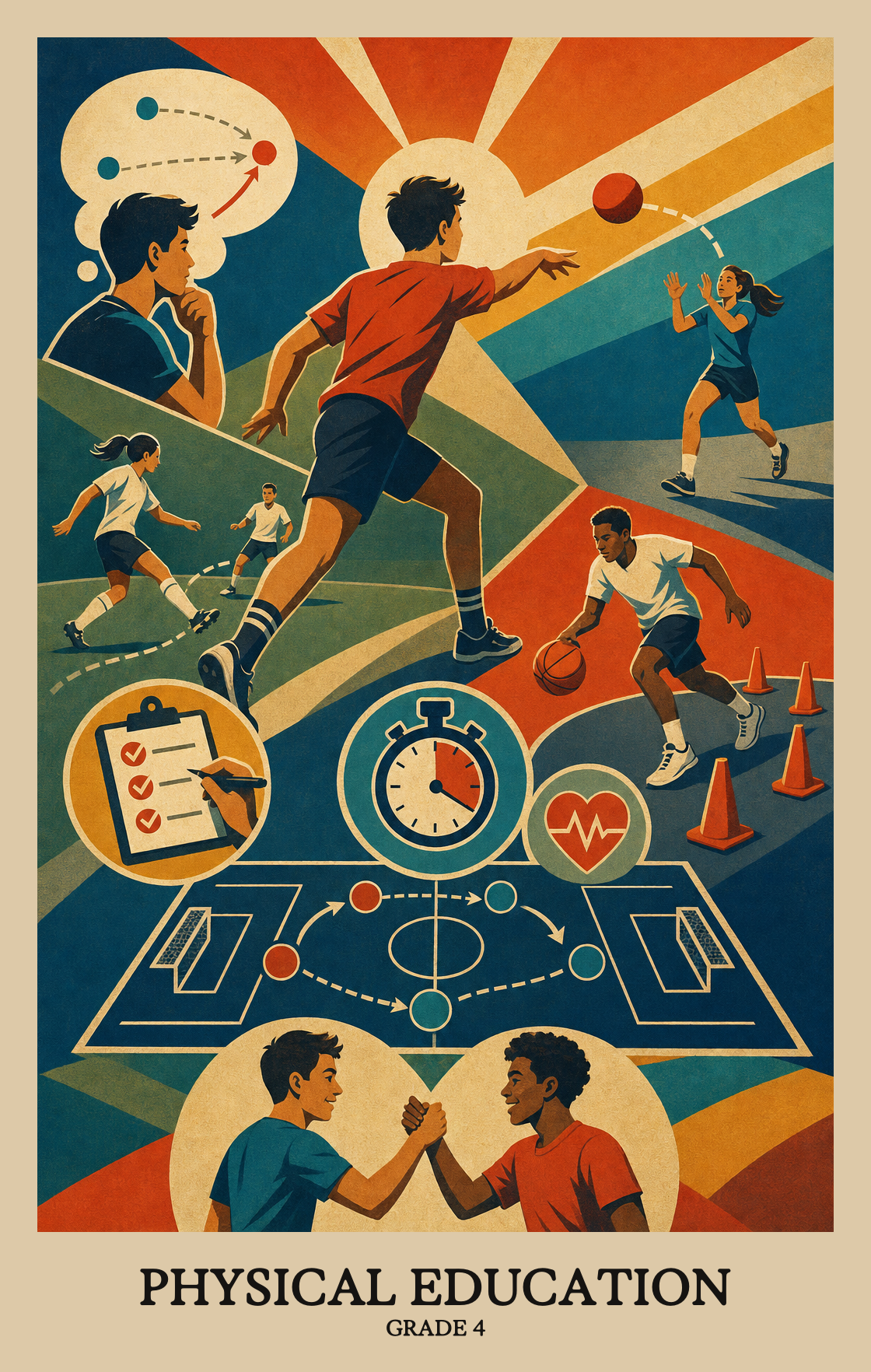
Students sharpen running, jumping, throwing, and catching in group games. They also practice the habits that make gym work for everyone, like taking turns and including classmates.
Students start using simple strategy in team games, such as spreading out on the field or passing to an open teammate. They learn why the rules exist and how to handle winning and losing.
Students build stamina, strength, and flexibility through activities like running, jumping rope, and stretching. They learn how regular activity, sleep, and water keep the body feeling good.
Students try movement set to music, including simple dances and rhythm routines. They get more comfortable trying new things in front of classmates and cheering others on.
Students think about which activities they enjoy outside of school, from biking to swimming to playing tag at the park. They start to see how staying active fits into family and neighborhood life.
Students practice foundational movements like throwing, catching, jumping, and balancing across different activities. The goal is to get comfortable with a range of physical skills, not just one or two.
Students use what they know about speed, space, and body position to make smarter decisions during games and activities. They start connecting the "why" behind movement to what actually works in play.
Students practice staying active in ways that build lasting fitness, not just for PE class. They learn how hard to push, when to rest, and how to make physical activity a regular habit.
Students follow class rules, take turns, and treat teammates with respect during physical activities. This standard covers how students act toward others, handle winning or losing, and stay safe in gym class.
Students explain why staying active matters beyond just fitness, such as how a sport can feel fun, push them to improve, or give them a way to connect with others.
Students learn that jobs like coaching, athletic training, and physical therapy exist, and they practice finding local places and tools that help them stay active and healthy.
| Standard | Definition | Code |
|---|---|---|
| Moving your body with skill and control | Students practice foundational movements like throwing, catching, jumping, and balancing across different activities. The goal is to get comfortable with a range of physical skills, not just one or two. | NY-PE.1.4 |
| How your body moves and why | Students use what they know about speed, space, and body position to make smarter decisions during games and activities. They start connecting the "why" behind movement to what actually works in play. | NY-PE.2.4 |
| Staying active and fit for life | Students practice staying active in ways that build lasting fitness, not just for PE class. They learn how hard to push, when to rest, and how to make physical activity a regular habit. | NY-PE.3.4 |
| Respect yourself and others in PE | Students follow class rules, take turns, and treat teammates with respect during physical activities. This standard covers how students act toward others, handle winning or losing, and stay safe in gym class. | NY-PE.4.4 |
| Why being active is good for you | Students explain why staying active matters beyond just fitness, such as how a sport can feel fun, push them to improve, or give them a way to connect with others. | NY-PE.5.4 |
| Fitness careers and healthy community habits | Students learn that jobs like coaching, athletic training, and physical therapy exist, and they practice finding local places and tools that help them stay active and healthy. | NY-PE.6.4 |
Students should throw, catch, kick, dribble, jump, and strike with control in games and activities. They should also follow rules, work with a partner or team, and understand why staying active matters for their health.
Spend ten minutes a day on simple active play like playing catch, jumping rope, riding a bike, or kicking a ball in the yard. The goal is regular practice and enjoyment, not drills. Walks after dinner count too.
Pick one skill at a time, like catching a tennis ball off a wall or dribbling a basketball ten times in a row. Short, low-pressure practice builds confidence faster than full games. Praise effort and small wins.
Aim for about 60 minutes of active play most days. It does not need to happen all at once. Bike rides, playground time, dance, swimming, and backyard games all count toward the total.
Start the year with locomotor work and underhand and overhand throwing, then move into dribbling, passing, and striking with hands and short implements. Save small-sided games for later units once skills are steady. Revisit earlier skills inside new game contexts.
Students apply skills in modified games, not just isolated drills. Look for control under light pressure, decent body position, and the ability to talk about simple strategy such as moving to open space or guarding a partner.
Striking with an implement and catching a moving ball trip up the most students. Cooperative behavior in small-sided games also needs ongoing coaching. Build in short skill stations and quick teacher check-ins before each game day.
Set clear routines for safety, sharing equipment, and including everyone. Use short team challenges that require talking and problem solving. Name the behavior you want, such as encouraging a teammate, and call it out when students do it.
Students learn to notice their heart rate, breathing, and effort during activity. They try different kinds of fitness work like running, stretching, and strength games, and start to connect daily habits to feeling good and having energy.
By spring, students should move with control in a variety of games, follow rules without constant reminders, and explain one or two ways physical activity helps their body and mood. That sets them up for more complex team play next year.