Getting ideas for art
Students start the year by turning their own experiences and interests into art ideas. They sketch, brainstorm, and try out different ways to begin a piece before settling on one.
This is the year art becomes about choices, not just making something pretty. Students plan a piece before they start, then revise it based on what they see and what others say. They look closely at art from different times and places and talk about what the artist might have meant. By spring, they can pick a finished piece, explain the choices behind it, and show it in a way that fits the message.
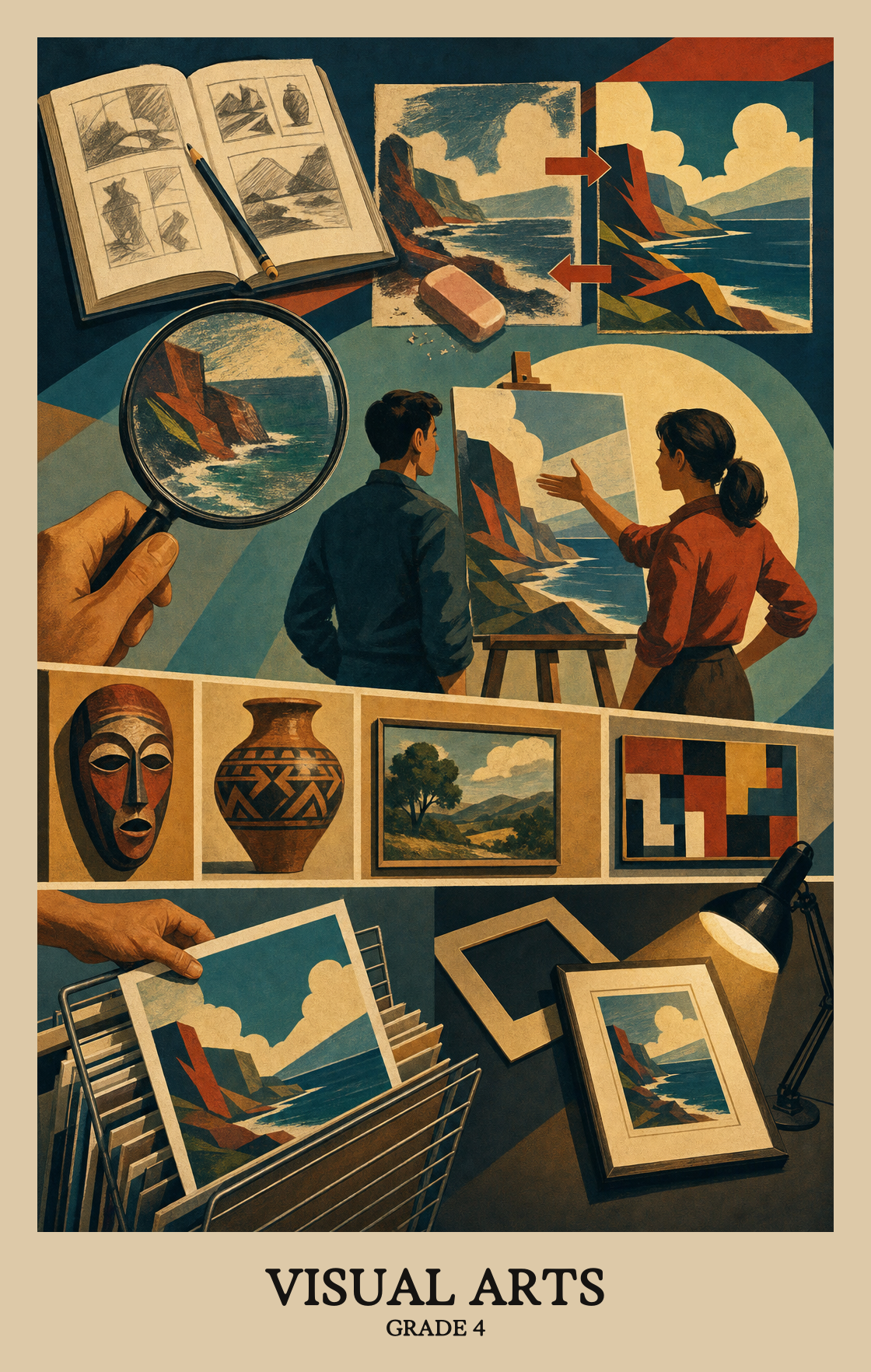
Students start the year by turning their own experiences and interests into art ideas. They sketch, brainstorm, and try out different ways to begin a piece before settling on one.
Students practice with paint, paper, clay, and drawing tools. They learn how to plan a piece, fix mistakes, and keep working on something even when the first try does not look right.
Students look at art from different cultures and time periods and talk about what the artist might have been showing or feeling. They then borrow ideas from what they see to shape their own work.
Students slow down to study artwork, their own and other people's. They describe what they notice, guess at the meaning, and use simple criteria to say what is working and what could be stronger.
Students choose pieces they are proud of, polish them, and prepare them for display. They think about how the setup, title, and order of pieces help a viewer understand what they were trying to say.
Students draw on things they know and have lived through to make their own artwork, connecting personal memories or ideas to the choices they make while creating.
Students look at artworks and ask where, when, and why they were made. Connecting a painting or sculpture to its time and place helps students understand what it meant to the people who created it.
| Standard | Definition | Code |
|---|---|---|
| Making art from your own experiences | Students draw on things they know and have lived through to make their own artwork, connecting personal memories or ideas to the choices they make while creating. | VA:Cn10.4 |
| Art in its time and place | Students look at artworks and ask where, when, and why they were made. Connecting a painting or sculpture to its time and place helps students understand what it meant to the people who created it. | VA:Cn11.4 |
Students brainstorm original ideas for artwork before picking up a brush or pencil. They sketch, plan, and think through what they want to make and why.
Students plan and build out their art ideas, making choices about materials, composition, and technique before and during the creative process.
Students look at a piece of art they made, decide what isn't working yet, and fix it before calling it done.
| Standard | Definition | Code |
|---|---|---|
| Coming up with ideas for your own artwork | Students brainstorm original ideas for artwork before picking up a brush or pencil. They sketch, plan, and think through what they want to make and why. | VA:Cr1.4 |
| Develop and organize your art ideas | Students plan and build out their art ideas, making choices about materials, composition, and technique before and during the creative process. | VA:Cr2.4 |
| Finishing and improving your artwork | Students look at a piece of art they made, decide what isn't working yet, and fix it before calling it done. | VA:Cr3.4 |
Students choose which of their artworks to present and explain why that piece best shows their ideas or skills.
Students revisit and improve a piece of artwork before presenting it, making specific changes to technique, detail, or composition based on their own observations.
Students choose how to display their artwork so that viewers understand what the piece is meant to express. The arrangement, setting, and order of the work all shape what people take away from it.
| Standard | Definition | Code |
|---|---|---|
| Choosing art to share with others | Students choose which of their artworks to present and explain why that piece best shows their ideas or skills. | VA:Pr4.4 |
| Refining art before it goes on display | Students revisit and improve a piece of artwork before presenting it, making specific changes to technique, detail, or composition based on their own observations. | VA:Pr5.4 |
| Sharing art and explaining what it means | Students choose how to display their artwork so that viewers understand what the piece is meant to express. The arrangement, setting, and order of the work all shape what people take away from it. | VA:Pr6.4 |
Students look closely at a piece of art and describe what they notice, from colors and shapes to the mood the artist created.
Students look at a piece of artwork and explain what they think the artist meant to communicate. They support their thinking with details from the work itself.
Students look at a piece of art and use a set of criteria to explain what works, what doesn't, and why. It's structured opinion, not just "I like it."
| Standard | Definition | Code |
|---|---|---|
| Looking closely at artwork | Students look closely at a piece of art and describe what they notice, from colors and shapes to the mood the artist created. | VA:Re7.4 |
| Reading meaning in artwork | Students look at a piece of artwork and explain what they think the artist meant to communicate. They support their thinking with details from the work itself. | VA:Re8.4 |
| Judging art using your own criteria | Students look at a piece of art and use a set of criteria to explain what works, what doesn't, and why. It's structured opinion, not just "I like it." | VA:Re9.4 |
Students make art that connects to their own lives and to the world around them. They plan ideas, try different materials, and revise their work before sharing it. They also look closely at art made by others and talk about what it means.
Pencils, markers, scrap paper, cardboard, and old magazines are enough. Ask students to draw something from a memory or from a story they like, then ask what they want a viewer to notice. Hanging finished work on the fridge tells students their ideas matter.
Students should be able to come up with their own idea for a piece, choose materials that fit the idea, and revise the work before calling it done. They should also be able to explain what a piece of art is about and why an artist might have made it that way.
Build the year around a few longer projects rather than many one-day crafts. Each project should move through generating ideas, drafting, getting feedback, and refining. Leave room between projects to look at artists who connect to the theme so students see how artists make choices.
Most students this age start comparing their work to others and decide they cannot draw. Focus on the idea behind the piece rather than how realistic it looks. Ask what the picture is about and what they might change next time, and the skills follow.
Refining work is the hardest part. Students often want to finish quickly and resist going back in. Build in a required revision step for every project, with a short conference or peer feedback round, so revising becomes a normal part of making art rather than a punishment.
When looking at a painting, photo, or even a movie poster, ask what students notice first and why they think the artist put it there. Then ask what mood the piece gives them. Two or three minutes of this kind of talk builds the same skills students use in class.
Students are ready when they can start a project from their own idea, stick with it through a rough middle stage, and explain the choices they made. They should also be able to give a classmate useful feedback that goes beyond saying the work looks nice.