Moving with control
Students sharpen the basics like running, skipping, jumping, and catching. Parents will see steadier balance and smoother movement during games at recess and on the playground.
This is the year movement gets more deliberate. Students sharpen skills like throwing, catching, kicking, and jumping, then start using them in simple games with rules and teammates. They learn what regular activity does for their body and begin tracking habits like warming up and staying active. By spring, students can play a basic group game fairly, follow the rules, and explain why moving every day matters.
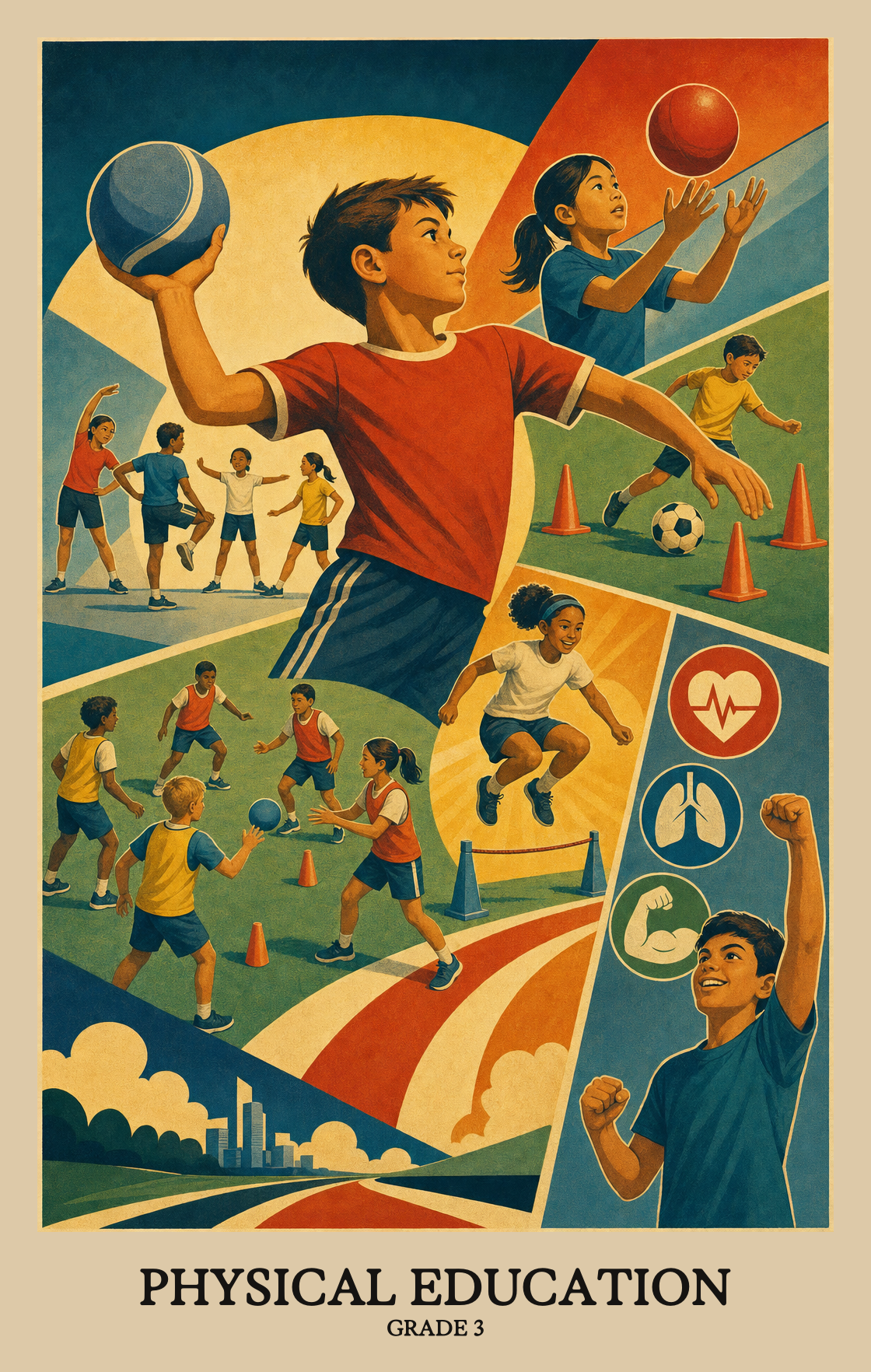
Students sharpen the basics like running, skipping, jumping, and catching. Parents will see steadier balance and smoother movement during games at recess and on the playground.
Students learn how to take turns, play fair, and work with a partner or small team. Parents may notice better sportsmanship after a tough loss or a close call.
Students try activities that get the heart pumping and the muscles working. They start to notice how the body feels during exercise and why warm-ups matter.
Students put their movement skills together in simple versions of sports and group activities. They practice quick thinking, like where to pass or where to stand on the field.
Students talk about why daily activity matters and how to find movement they enjoy. They start to see physical activity as something fun to keep doing outside of school.
Students practice running, jumping, throwing, and balancing so their bodies learn to move with control. The goal is to get comfortable with many different ways to move, not just one or two.
Students learn how body position, speed, and space affect how well they move. They start using that thinking to make real choices during games and activities.
Students practice staying active in ways that are good for their health, like running, jumping, or playing a game that gets their heart pumping. They learn why regular movement matters and how to keep it up on their own.
Students practice being a good sport and teammate: taking turns, following rules, and treating classmates with respect during games and activities.
Students explain why being active matters, connecting exercise to feeling good, having fun, or working through a challenge. It's the "why move?" question put into words.
Students explore jobs in sports and fitness (like coaches or trainers) and learn how to use local parks, gyms, and community programs to stay active and healthy.
| Standard | Definition | Code |
|---|---|---|
| Moving and controlling your body | Students practice running, jumping, throwing, and balancing so their bodies learn to move with control. The goal is to get comfortable with many different ways to move, not just one or two. | NY-PE.1.3 |
| How your body moves and why | Students learn how body position, speed, and space affect how well they move. They start using that thinking to make real choices during games and activities. | NY-PE.2.3 |
| Staying active and fit | Students practice staying active in ways that are good for their health, like running, jumping, or playing a game that gets their heart pumping. They learn why regular movement matters and how to keep it up on their own. | NY-PE.3.3 |
| Respect yourself and others in gym class | Students practice being a good sport and teammate: taking turns, following rules, and treating classmates with respect during games and activities. | NY-PE.4.3 |
| Why moving feels good | Students explain why being active matters, connecting exercise to feeling good, having fun, or working through a challenge. It's the "why move?" question put into words. | NY-PE.5.3 |
| Careers and resources in fitness and wellness | Students explore jobs in sports and fitness (like coaches or trainers) and learn how to use local parks, gyms, and community programs to stay active and healthy. | NY-PE.6.3 |
Students practice running, jumping, throwing, catching, kicking, and balancing in games and activities. They start using simple strategies, like spreading out on the field or aiming where a partner is not. Most of the year is about getting more coordinated and learning to play fairly with others.
Aim for an hour of active play most days. Walks, bike rides, tag in the yard, dancing in the living room, or playing catch all count. Students this age do better with short, fun bursts of movement than with long workouts.
By spring, students should run and dodge with control, throw and catch with a partner, jump rope for a stretch, and kick or strike a ball toward a target. They should also follow game rules, take turns, and keep moving during activity time without needing constant reminders.
A common path is locomotor skills and spatial awareness in the fall, throwing and catching games in early winter, jump rope and fitness testing midyear, then striking and kicking units in spring. Mixing in cooperative games every few weeks keeps social skills sharp.
Catching a ball with hands instead of trapping it against the chest, throwing with opposition, and striking a moving object all take extra practice. Plan to revisit these in short warm-ups across multiple units rather than teaching them once and moving on.
Focus on practice, not talent. Pick one skill, like catching a tennis ball or jumping rope, and spend five minutes a few nights a week working on it. Progress on one skill usually builds confidence in the rest.
Use small groups, clear rules, and quick check-ins after games. Praise specific behavior, such as passing to a teammate who has not had a turn or shaking hands after a loss. Reteach expectations after holiday breaks, when routines tend to slip.
Students start to notice why their heart beats faster, why they sweat, and which activities feel hardest. Short talks before or after activity, plus a simple fitness check a couple of times a year, help connect effort to how their body feels.
Look for students who can combine skills, like running and then throwing, or dribbling and then passing. They should also play simple games with light officiating, follow safety rules without prompts, and stay active for most of the class period.