Sparking ideas for art
Students start the year gathering ideas from their own lives and the world around them. They sketch, brainstorm, and try out different ways to turn an idea into a picture or object.
This is the year art shifts from making pictures to making choices. Students plan their ideas before they start, try different ways to show what they mean, and go back to fix what isn't working. They also begin talking about art with real reasons, explaining why a piece feels a certain way or what the artist might have meant. By spring, students can pick a finished piece, share it for others to see, and say why they chose it.
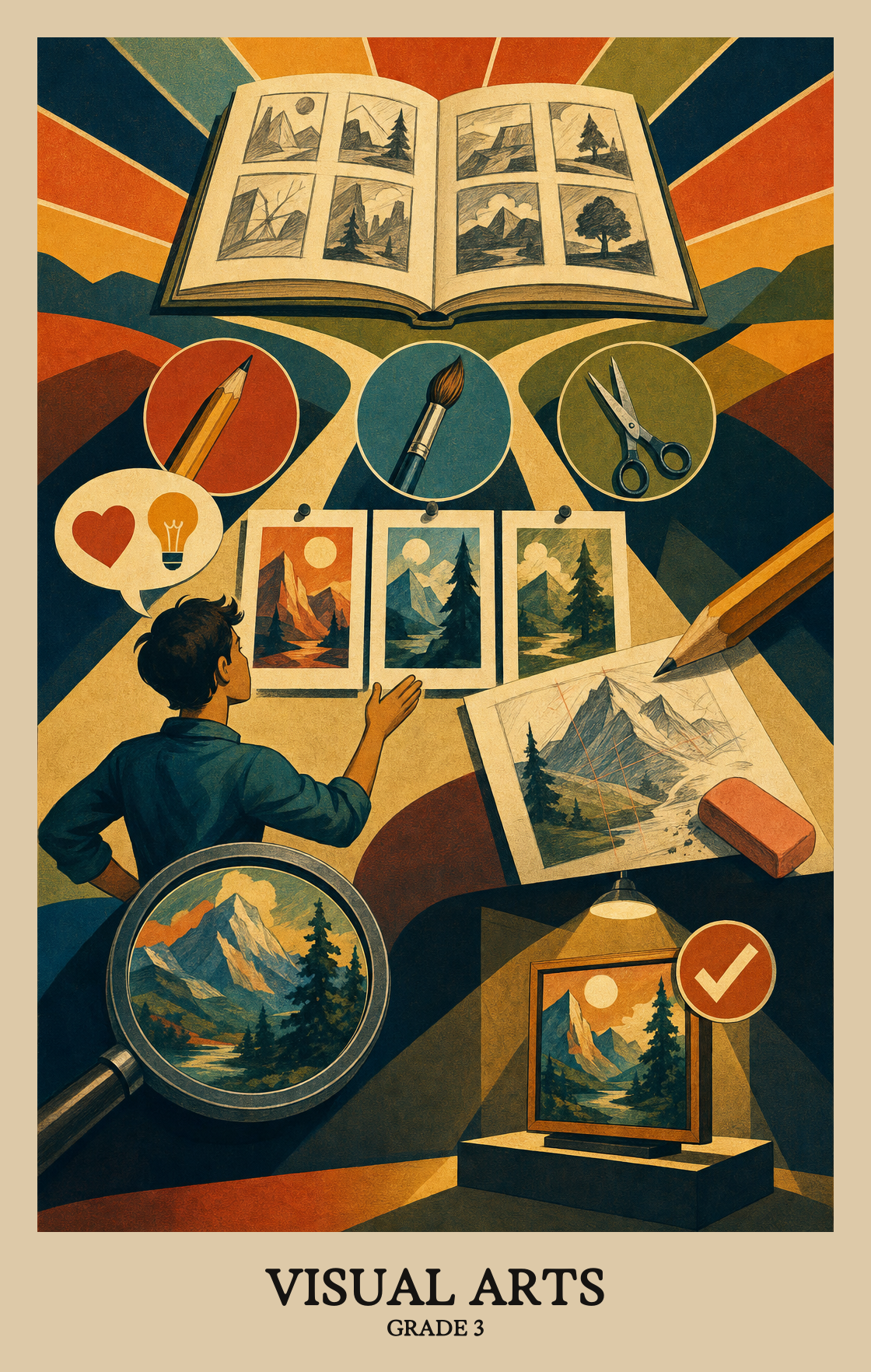
Students start the year gathering ideas from their own lives and the world around them. They sketch, brainstorm, and try out different ways to turn an idea into a picture or object.
Students practice using tools and materials like paint, paper, and clay with more control. They learn to make choices about color, shape, and arrangement as they shape a piece from rough draft to finished work.
Students slow down to study artwork made by others and by themselves. They notice what an artist might be trying to say and start using simple reasons to explain what works in a piece and what could be stronger.
Students wrap up the year by choosing pieces to display and thinking about how the setup shapes what viewers notice. They also connect art to history and culture, seeing how artists across time have told stories through images.
Students connect something from their own life to the art they make, using personal memories or observations as a starting point for a project.
Students look at a piece of art and ask where, when, and why it was made. Connecting a painting or sculpture to its time and place helps students understand what the artist was trying to say.
| Standard | Definition | Code |
|---|---|---|
| Making art from what you know and live | Students connect something from their own life to the art they make, using personal memories or observations as a starting point for a project. | VA:Cn10.3 |
| Art from other times and places | Students look at a piece of art and ask where, when, and why it was made. Connecting a painting or sculpture to its time and place helps students understand what the artist was trying to say. | VA:Cn11.3 |
Students brainstorm ideas for their own artwork, sketching out plans or making early choices about what to create before picking up a brush or cutting paper.
Students take a rough idea for an artwork and make deliberate choices about color, shape, and composition to turn it into a finished piece.
Students review their own artwork, make small adjustments, and decide when a piece is finished. The focus is on looking closely and improving the work before calling it done.
| Standard | Definition | Code |
|---|---|---|
| Coming up with ideas for art | Students brainstorm ideas for their own artwork, sketching out plans or making early choices about what to create before picking up a brush or cutting paper. | VA:Cr1.3 |
| Organize ideas into finished artwork | Students take a rough idea for an artwork and make deliberate choices about color, shape, and composition to turn it into a finished piece. | VA:Cr2.3 |
| Finish and improve your artwork | Students review their own artwork, make small adjustments, and decide when a piece is finished. The focus is on looking closely and improving the work before calling it done. | VA:Cr3.3 |
Students look at several of their own artworks, talk about what makes each one strong, and choose the piece they want to show to others.
Students practice and improve a piece of artwork before sharing it with others. They learn how to refine details, fix mistakes, and get a finished piece ready to display.
Students choose how to display or share their artwork so viewers understand the idea or feeling behind it. The way a piece is presented is part of what it communicates.
| Standard | Definition | Code |
|---|---|---|
| Choosing art to share with others | Students look at several of their own artworks, talk about what makes each one strong, and choose the piece they want to show to others. | VA:Pr4.3 |
| Improve your artwork before showing it | Students practice and improve a piece of artwork before sharing it with others. They learn how to refine details, fix mistakes, and get a finished piece ready to display. | VA:Pr5.3 |
| Sharing art and explaining what it means | Students choose how to display or share their artwork so viewers understand the idea or feeling behind it. The way a piece is presented is part of what it communicates. | VA:Pr6.3 |
Students look closely at a piece of art and describe what they notice, from the colors and shapes to the overall mood or story the artist seems to be telling.
Students look at a piece of art and explain what they think the artist meant to say or show. They use details they can see to back up their thinking.
Students look at a piece of art and decide what makes it work or fall short, using specific reasons like color choice, detail, or how well it fits the assignment.
| Standard | Definition | Code |
|---|---|---|
| Looking closely at art and explaining what you see | Students look closely at a piece of art and describe what they notice, from the colors and shapes to the overall mood or story the artist seems to be telling. | VA:Re7.3 |
| Reading what art is trying to say | Students look at a piece of art and explain what they think the artist meant to say or show. They use details they can see to back up their thinking. | VA:Re8.3 |
| Judging what makes art work | Students look at a piece of art and decide what makes it work or fall short, using specific reasons like color choice, detail, or how well it fits the assignment. | VA:Re9.3 |
Students make art from their own ideas and experiences, learn to plan before they start, and practice finishing work they are proud of. They also look closely at art other people made, talk about what it might mean, and try out new tools like paint, clay, and collage.
Keep a small box with paper, pencils, markers, scissors, glue, and a few recycled items like cardboard or magazines. Ask students to draw something from their day or design something they wish existed. Ten minutes of regular drawing matters more than fancy materials.
At this age, art is about thinking and trying, not making something that looks real. Praise the idea, the effort, and the choices students made, such as the colors picked or the part added last. Avoid drawing on top of their work to fix it.
Start with idea generation and basic skills like line, shape, and color mixing, then move into longer projects that ask for planning and revision. Save presentation and critique work for later in the year, once students have finished pieces they care about and a shared vocabulary to talk about them.
Students can come up with their own idea for a piece, sketch a plan, and follow it through to a finished work. They can talk about what their art means, point to choices they made, and notice details in other artists' work using words like line, shape, color, and texture.
Plan for short discussions in most classes, even five minutes. Show one artwork, ask what students notice, what they think is happening, and what makes them say that. This builds the language students need to describe their own choices later.
Students learn that art has always been a way people share ideas about where they live, what they believe, and who they are. Looking at art from different places and times helps students see more possibilities for their own work and connects art class to social studies.
Sit with them and ask what part is done, what part still needs work, and what they want a viewer to notice. Set a small goal for one sitting, like finishing the background or adding details to one area. Finishing matters more than making it perfect.
Planning before making and revising after a first try are the hardest habits at this age. Many students want to jump straight to a final piece, then call it done. Build in quick sketch steps and a short reflection at the end of each project so revision feels normal.