Healthy habits and daily choices
Students start the year by looking at what keeps a person well: sleep, food, movement, and stress. They learn how small daily choices add up over time.
This is the year health class gets real about the pressures of middle school. Students look at how friends, social media, and family shape the choices they make about food, sleep, stress, and their changing bodies. They practice saying no, asking for help, and checking whether a source is trustworthy before believing it. By spring, students can talk through a tough decision out loud and explain the healthier path.
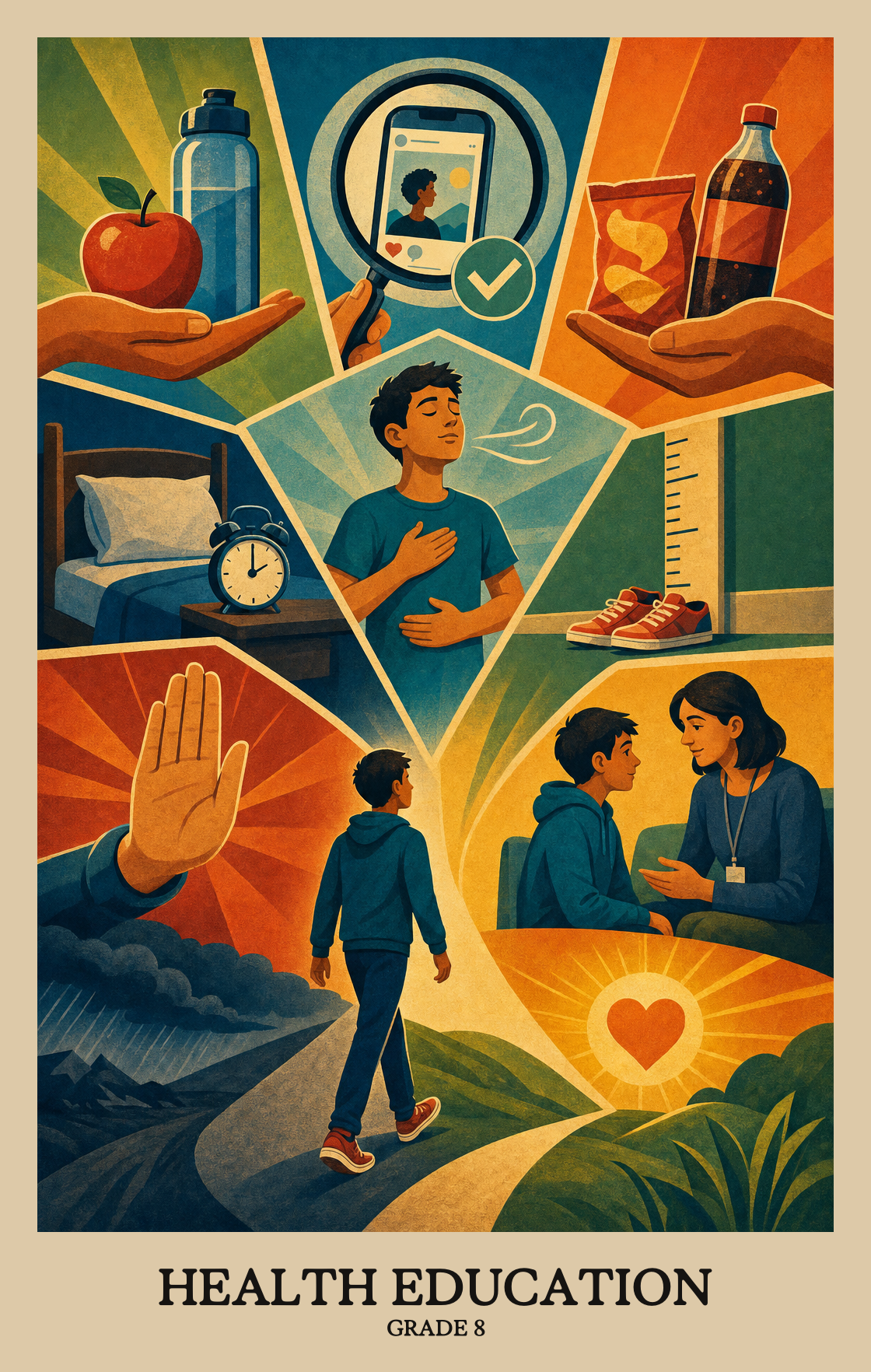
Students start the year by looking at what keeps a person well: sleep, food, movement, and stress. They learn how small daily choices add up over time.
Students look at what pushes their choices, from friends and family to ads and social media. They practice noticing when a message is selling something versus giving real information.
Students practice tracking down reliable answers to health questions instead of guessing or trusting the first search result. They learn which sources, products, and services actually help.
Students work on what to say when a conversation is hard: saying no, asking for help, or speaking up for a friend. They practice clear, respectful words for real situations.
Students learn a steady way to think through choices and to set a goal they can actually reach. They break a bigger goal into smaller steps and check their progress.
Students close the year by putting it all together: reducing risk in their own lives and supporting health at home and in the community. They practice being a helpful voice for the people around them.
Students study how the body, mind, and social life connect to build lasting health habits. This standard covers the core facts and ideas behind healthy choices, from nutrition and sleep to stress and relationships.
Students examine how personal values, friends, family, media, and culture shape the health choices they make. The goal is to spot those influences before they steer a decision.
Students learn to find trustworthy health information and think critically about it. That means knowing which websites, labels, or services to trust and which ones to question.
Students practice the conversations that affect their health: saying no to risky situations, asking for help, and resolving conflict with peers. The goal is to communicate clearly when the stakes are real.
Students practice a step-by-step process for making choices that protect their health, like deciding how to respond to peer pressure or what to do when a situation feels unsafe.
Students pick a specific health goal, like getting more sleep or being more active, and map out steps to reach it. They track their progress and adjust the plan when something isn't working.
Students identify habits that lower their health risks and put those habits into regular practice. This covers choices around sleep, food, physical activity, stress, and avoiding substances that cause harm.
Students practice explaining healthy choices to others, whether that means talking through a decision with a family member or backing a health effort in their school or neighborhood.
| Standard | Definition | Code |
|---|---|---|
| Habits that protect your health | Students study how the body, mind, and social life connect to build lasting health habits. This standard covers the core facts and ideas behind healthy choices, from nutrition and sleep to stress and relationships. | CA-HE.1.8 |
| What shapes your health choices | Students examine how personal values, friends, family, media, and culture shape the health choices they make. The goal is to spot those influences before they steer a decision. | CA-HE.2.8 |
| Finding and checking health information | Students learn to find trustworthy health information and think critically about it. That means knowing which websites, labels, or services to trust and which ones to question. | CA-HE.3.8 |
| Talking to others about your health | Students practice the conversations that affect their health: saying no to risky situations, asking for help, and resolving conflict with peers. The goal is to communicate clearly when the stakes are real. | CA-HE.4.8 |
| Making healthy choices on purpose | Students practice a step-by-step process for making choices that protect their health, like deciding how to respond to peer pressure or what to do when a situation feels unsafe. | CA-HE.5.8 |
| Setting health goals that stick | Students pick a specific health goal, like getting more sleep or being more active, and map out steps to reach it. They track their progress and adjust the plan when something isn't working. | CA-HE.6.8 |
| Habits that lower risk and protect health | Students identify habits that lower their health risks and put those habits into regular practice. This covers choices around sleep, food, physical activity, stress, and avoiding substances that cause harm. | CA-HE.7.8 |
| Protecting your health and your community's health | Students practice explaining healthy choices to others, whether that means talking through a decision with a family member or backing a health effort in their school or neighborhood. | CA-HE.8.8 |
Students learn how the body works, how choices affect health, and how to handle real situations like peer pressure, stress, friendships, and online life. They also practice reading health information critically so they can tell solid advice from bad advice.
Talk through everyday choices out loud: what's for dinner, how much sleep students got, how a hard moment at school felt. Short, regular conversations matter more than one big talk. Let students help plan a meal or a weekend routine so they practice making the call themselves.
Topics include nutrition, mental and emotional health, substances, personal safety, and human development. Some units, like the unit on growth and sexual health, allow families to review materials and opt out. Ask the teacher for the unit outline and the opt-out form before the unit starts.
Open with skills students will use in every unit: decision-making, goal-setting, and analyzing influences. Then rotate through content units (mental health, nutrition, substances, safety, growth and development) and revisit the same skills inside each one so they stick.
Set norms early, give students a way to ask questions anonymously, and stick to accurate information without scare tactics. Tell families what's coming before the unit starts and share the resources the school counselor can offer if something comes up for a student.
Name what's happening, then move to one small action: a walk, a glass of water, writing the worry down, or breaking a task into the next ten minutes. If low mood, panic, or sleep problems last more than a couple of weeks, contact the school counselor or pediatrician.
Use short performance tasks: students analyze an ad, role-play turning down a vape, set a two-week sleep goal, or write a response to a friend in a tough spot. A quick rubric on the skill (decision-making, communication, goal-setting) tells more than a multiple-choice quiz.
Students should be able to find reliable health information, spot pressure from peers and media, set a realistic goal and track it, and speak up in a hard conversation. They should also know who to ask for help at school and at home.