Starting with musical ideas
Students come up with their own musical ideas and start short pieces of their own. They pull from songs they know, from feelings, and from things happening in their lives.
This is the year music gets personal and intentional. Students take their own ideas, life experiences, and the songs they hear around them, and shape that material into pieces they perform or record on purpose. They rehearse with a plan, revise based on feedback, and explain why a song works or doesn't. By spring, they can present a polished piece and talk clearly about the choices behind it.
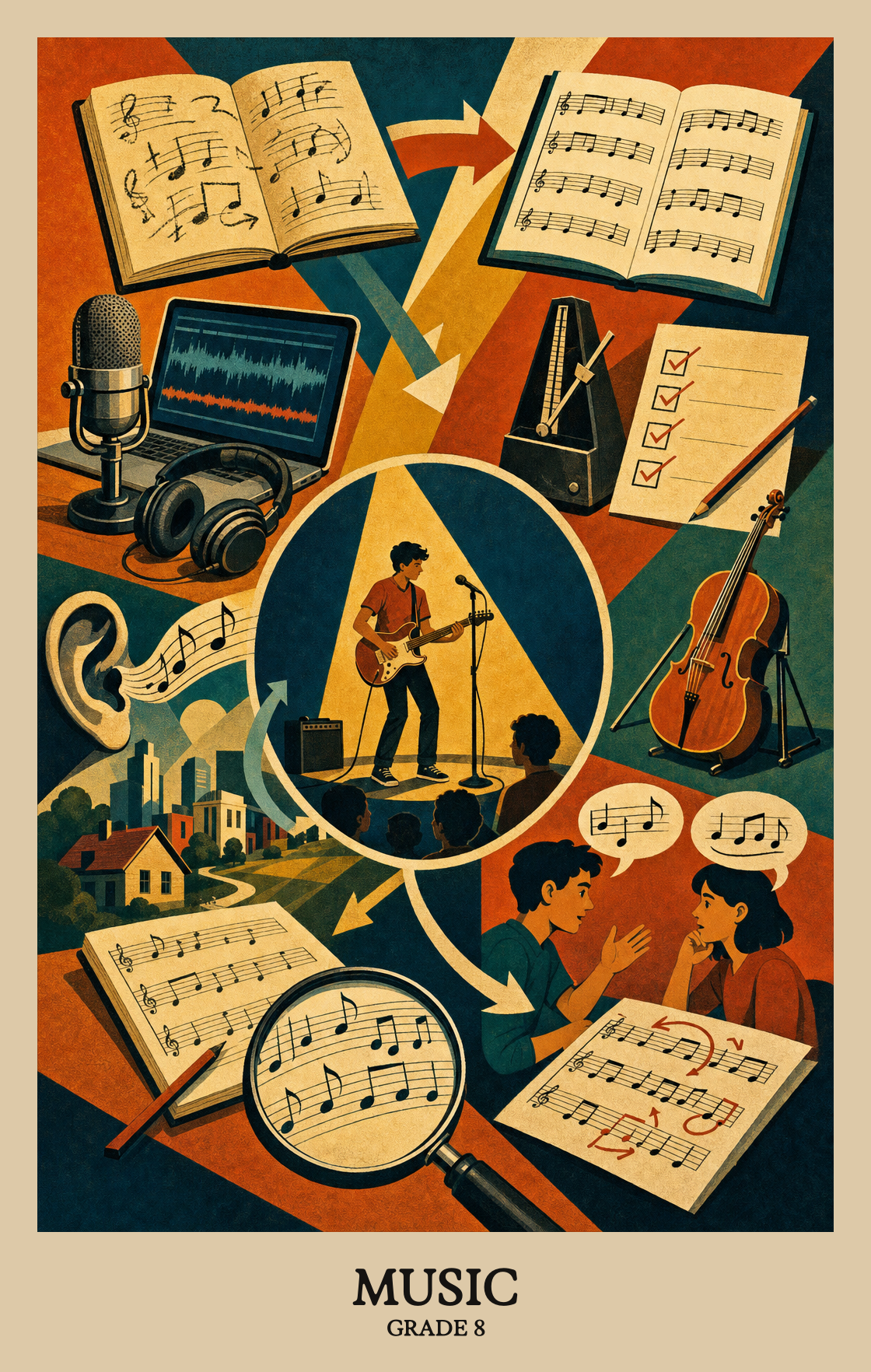
Students come up with their own musical ideas and start short pieces of their own. They pull from songs they know, from feelings, and from things happening in their lives.
Students take a rough idea and turn it into something more finished. They organize the parts, try different versions, and edit until the piece works the way they want.
Students listen to a wide range of music and describe what they hear. They explain what the music seems to be about and back up their reactions with specifics from the song.
Students look at how music fits into history and culture. They study how songs from different eras and communities reflect what people cared about.
Students choose pieces to perform and work on their playing or singing. They practice with a goal in mind and shape the performance so an audience understands what the music is saying.
Students perform for others and use a clear set of criteria to evaluate music, including their own. They explain what worked, what fell short, and what they would change next time.
Students connect what they know and what they've lived through to the music they create or perform. Personal experience shapes the choices they make as musicians.
Students look at a piece of music and figure out where it came from: what was happening in the world, what culture shaped it, and why it sounded the way it did.
| Standard | Definition | Code |
|---|---|---|
| Using life experience to make music | Students connect what they know and what they've lived through to the music they create or perform. Personal experience shapes the choices they make as musicians. | CA-MU:Cn10.8.8 |
| Music and the world that made it | Students look at a piece of music and figure out where it came from: what was happening in the world, what culture shaped it, and why it sounded the way it did. | CA-MU:Cn11.8.8 |
Students brainstorm and develop original musical ideas, experimenting with melody, rhythm, or structure to shape a piece they can build on.
Students take a musical idea they've started and shape it into something more complete, making choices about structure, sound, and what to keep or cut.
Students revise a piece of music based on feedback, then finish it to a standard they can defend. They explain the choices they made and why the final version works.
| Standard | Definition | Code |
|---|---|---|
| Coming up with musical ideas | Students brainstorm and develop original musical ideas, experimenting with melody, rhythm, or structure to shape a piece they can build on. | CA-MU:Cr1.8.8 |
| Develop and shape musical ideas | Students take a musical idea they've started and shape it into something more complete, making choices about structure, sound, and what to keep or cut. | CA-MU:Cr2.8.8 |
| Finish and polish a musical composition | Students revise a piece of music based on feedback, then finish it to a standard they can defend. They explain the choices they made and why the final version works. | CA-MU:Cr3.8.8 |
Students choose a piece of music to perform and explain why it suits their skills and the occasion. They think through what the music demands and make deliberate choices before they play or sing.
Students rehearse a piece of music until it's ready to share, fixing problem spots in rhythm, pitch, or dynamics along the way.
Students perform a piece of music with clear intention, making deliberate choices about dynamics, tempo, and expression so the audience understands the story or feeling behind the music.
| Standard | Definition | Code |
|---|---|---|
| Choosing music worth performing | Students choose a piece of music to perform and explain why it suits their skills and the occasion. They think through what the music demands and make deliberate choices before they play or sing. | CA-MU:Pr4.8.8 |
| Polishing music before a performance | Students rehearse a piece of music until it's ready to share, fixing problem spots in rhythm, pitch, or dynamics along the way. | CA-MU:Pr5.8.8 |
| Perform music and mean it | Students perform a piece of music with clear intention, making deliberate choices about dynamics, tempo, and expression so the audience understands the story or feeling behind the music. | CA-MU:Pr6.8.8 |
Students listen to a piece of music and break down what they hear, noticing how the composer uses melody, rhythm, and structure to make choices that shape the overall sound.
Students explain what a piece of music is trying to express and back up their thinking with specific details from the music itself, such as tempo, dynamics, or melody.
Students listen to a piece of music and use a clear set of criteria to judge how well it works. They explain what they heard and why it meets or falls short of the standard.
| Standard | Definition | Code |
|---|---|---|
| Listening closely to understand music | Students listen to a piece of music and break down what they hear, noticing how the composer uses melody, rhythm, and structure to make choices that shape the overall sound. | CA-MU:Re7.8.8 |
| Reading meaning in music | Students explain what a piece of music is trying to express and back up their thinking with specific details from the music itself, such as tempo, dynamics, or melody. | CA-MU:Re8.8.8 |
| Judging whether music works and why | Students listen to a piece of music and use a clear set of criteria to judge how well it works. They explain what they heard and why it meets or falls short of the standard. | CA-MU:Re9.8.8 |
Students create, perform, respond to, and connect with music. They write or arrange short pieces, rehearse and perform them, listen carefully to other music, and talk about how music ties to history and their own lives.
Set aside 15 or 20 minutes most days for steady practice on whatever instrument or voice work is assigned. Ask students to play a tricky section slowly three times, then up to tempo. Listening together to a song and talking about what stands out also counts as practice.
No. The work this year is about thinking like a musician, not about being a natural talent. Students are graded on effort, revision, and how well they can explain their choices, so steady practice and an open mind go a long way.
Most teachers braid them together rather than teaching them in blocks. A typical unit might start with listening to a model piece, move into composing or arranging a short version, then rehearse and perform it. Reflection and revision happen at every step.
Students can take a musical idea from sketch to finished performance, explain why they made the choices they made, and use specific criteria to judge their own work and the work of others. They should also be able to connect a piece of music to its time, place, or purpose.
Revision and self-evaluation are the hardest parts. Students often want to perform a piece once and call it done, so building in structured feedback rounds and clear criteria pays off. Notation accuracy and steady tempo also tend to need repeated work.
They should be able to rehearse a piece on their own, take feedback without shutting down, and talk about music using words like tempo, dynamics, and form. Being willing to perform in front of others, even nervously, is a strong sign of readiness.
It helps but is not always required. Ask the teacher what the class is using. If an instrument is needed, many schools loan them out, and free apps for keyboard, guitar, or rhythm practice can fill gaps between school sessions.